
Do Reps Jerseys Have Nike and Adidas Logos?
This question gets asked in almost exactly the same words every time: "the jerseys on the site don't have the brand badges on them, like the Nike on the Barça one — did it show up like this for you when you got yours?" Underneath it is a specific fear, and it is a reasonable one: that you will pay for a shirt and open a parcel containing a blank. The answer has three parts, because there are three genuinely different things going on — an edited photo, a deliberately blank shirt, and a retro reproduction with no mark to copy — and they look identical in a thumbnail. This page tells you which is which, what our own listings actually show (we checked, with the shirts named), and the four QC photos that settle it before your money leaves.
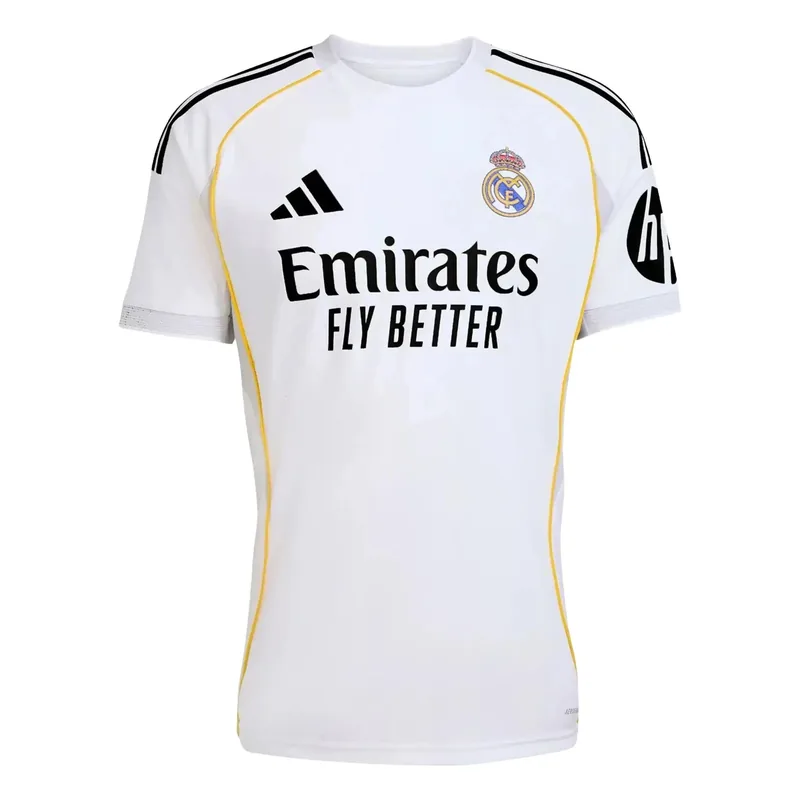
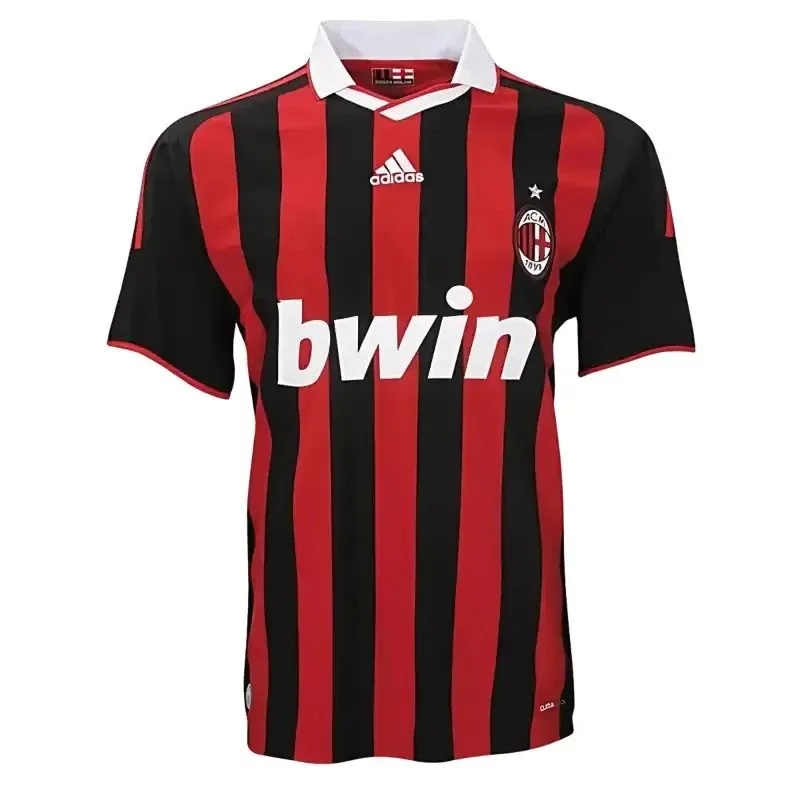
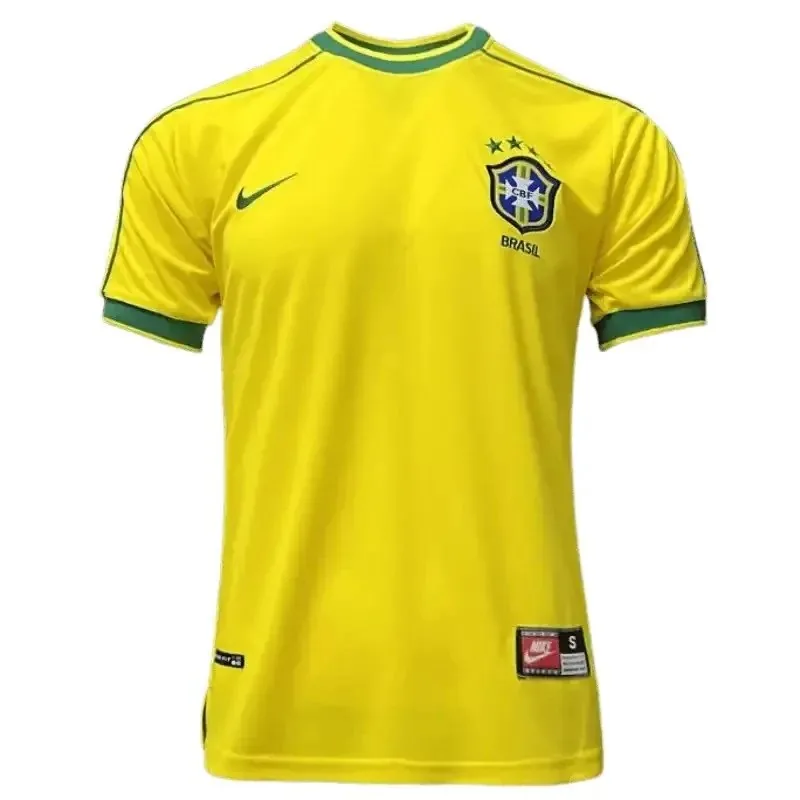
What our listings actually show
Rather than reassure you in the abstract, here is what we found when we opened our own product photography before writing this:
- Real Madrid 25/26 home — the adidas mark on the left chest, the club crest on the right, the Emirates Fly Better sponsor across the front, and the sleeve sponsor. Everything a shirt of that season carries.
- AC Milan 09/10 retro home — the adidas mark, the club crest with the star above it, and the bwin sponsor of that season. A period-correct reproduction rather than a stripped one.
- Brazil retro home — the Nike swoosh on the chest, the CBF crest with the stars, and even the Nike size tag at the hem.
So on this catalogue the marks are there, and the photograph shows them. That is the honest answer to the question as asked. It is also not a promise about every listing on every site, and the more useful thing we can give you is the ability to tell for yourself.
The three reasons a listing shows no logo
- The photo was edited, and the shirt is fine. This is the most common case, and the most confusing, because the thing that is missing is missing from the image, not the product. Marketplaces and payment processors take down listings that display protected marks, so some sellers erase the mark from the picture to keep the listing alive. The result is a photo that under-represents the item. You can often spot it: a suspiciously clean patch of fabric where a mark should be, a slight blur or smudge in that area, a chest that looks oddly empty next to a crisp crest, or the same shirt photographed from another angle with the mark visible further down the image gallery.
- The shirt really is blank. Some factories produce a plain version on purpose. There is a genuine buyer segment for it — people who want the colourway without carrying anybody's mark — and it is a different product rather than a defective one. The tell is consistency: a deliberately blank shirt is blank in every photo, from every angle, and usually blank in a way that looks designed rather than erased, with the fabric texture running uninterrupted through the area where a mark would sit.
- It is retro, and there was never a mark to copy from. A shirt from 1998 was made by whoever held the contract that year, and a factory reproducing it three decades later has no relationship with that company. Some reproduce the mark anyway; some leave the chest clean. Both versions of the same famous shirt exist, from different factories, at the same time. On retro, this is a per-shirt fact rather than a rule — which is why our retro guide works shirt by shirt.
The four QC photos that settle it
Every agent takes quality-control photographs after your item reaches the warehouse and before you pay for international shipping. That gap is the entire point of using an agent, and this question is precisely what it exists for. Ask for these four:
- The chest, straight on, in daylight. Not at an angle — an angled shot flattens a heat-applied mark into the fabric and tells you nothing.
- The crest, close. You are checking whether it is embroidered or heat-applied, and whether the edges are clean. This also tells you more about overall build quality than any other single detail.
- The manufacturer mark, close. Present or absent, and if present, whether it is raised and rubberised or printed flat.
- The inner neck label and the hem tag. The most-skipped shot and often the most revealing one, because it is where the size, the wash symbols and the branding either agree with the rest of the shirt or do not.
If the answer comes back wrong, you refuse the item there, at the warehouse, before freight. Our QC photos guide walks through how to request them and what a good set looks like.
What a missing mark does and does not tell you
Worth separating clearly, because people read far too much into it in both directions.
It does not tell you about quality. The manufacturer mark is a decoration a few centimetres wide. The things that decide whether a shirt looks right on a body are the fabric weight and knit, the accuracy of the colour for that season, the density and edge quality of the crest, the shoulder seam lines, and the collar construction. A well-made blank beats a badly made marked shirt every time, and you can see all of the above in a QC photo while the mark tells you almost nothing.
It does tell you something about how it will feel to wear. If the reason you want a specific shirt is the complete look of a specific season, a missing mark will bother you every time you put it on, and no amount of reasoning about quality will fix that. That is a legitimate preference — just make it a decision rather than a surprise. Our player version vs fan version guide covers the other detail people discover after the fact: the two versions differ in fabric and cut, not just price.
Where the marks come from, and why this is a shirt problem specifically
Football shirts carry more registered marks than almost anything else you can buy at this price. On a single shirt there is the manufacturer mark, the club or federation crest, the shirt sponsor, usually a sleeve sponsor, and on club shirts a competition badge as well. That is four or five separately owned marks on one garment, which is why the category attracts so much listing-level editing in the first place — there is more to trip a filter on here than on a plain hoodie.
It is also why patches and printing deserve their own page: the competition badges people ask about are separately produced items that may or may not come attached, and the answer changes what you should ask for at QC.
On the import side, the position is the same one we set out on our caps and belts pages: customs authorities act on trademarks that rights holders have recorded with them, so a garment carrying registered marks carries something a border check can act on, while a plain one does not. That is a description of the mechanism, not legal advice, and not a prediction about any individual parcel. We use "-style" wording throughout because that is what these shirts are.
The short version
- On this catalogue, the marks are thereManufacturer mark, crest and sponsor, visible in the listing photograph — we re-checked three shirts by name before publishing this.
- A missing logo in a photo usually means an edited photoSellers erase marks to keep listings alive. Look for a suspiciously clean patch, a smudge, or the mark visible in another shot in the same gallery.
- On retro, blank is genuinely commonThere is often no current relationship with the original manufacturer. Check per shirt, not by rule.
- Settle it at QC, not after deliveryChest straight on, crest close, manufacturer mark close, neck label. Four photos, before you pay for freight.
Ready to order?
- Open the listing gallery fully — the answer is often three images in, not in the thumbnail.
- Order through Kakobuy, or swap to any of the 15 agents we support from the product page.
- When the item lands in the warehouse, request the four QC shots above before approving.
- If the shirt is not what the listing showed, refuse it at that point. That is what the step is for.
New to agents? Start with how to use Kakobuy, then browse the football shirt catalogue. If you are sizing at the same time, size by height and weight answers that in sixty seconds, and best Kakobuy finds collects the strongest picks across every category.
Frequently asked questions
Do reps football shirts come with the Nike or adidas logo?
On this catalogue, yes — the manufacturer mark, the club crest and the shirt sponsor are all part of the shirt, and they are visible in the listing photograph. We checked this again before publishing: the Real Madrid 25/26 home shirt shows the adidas mark on the chest, the club crest and the Emirates sponsor; the AC Milan 09/10 retro shows the adidas mark, the crest and the period sponsor; the Brazil retro shows the Nike swoosh, the CBF crest and the Nike size label at the hem. What you should not do is assume that holds everywhere. Some listings on some sites show a shirt with the brand mark digitally removed, and a small number of shirts are genuinely produced without one. The rest of this page explains how to tell which you are looking at before you pay.
Why do some listings show a jersey with the logo removed?
The most common reason is that the photograph has been edited, not the shirt. Marketplaces and payment processors remove listings that display protected marks, so some sellers erase the mark from the image to keep the listing up — which means the photo is missing something the item has. It is a listing-survival tactic, and its side effect is exactly the confusion you are experiencing. The second possibility is that the shirt really is blank, either because the factory produced a plain version deliberately or because a retro reproduction was made without the original manufacturer mark. Those two cases look identical in a thumbnail and completely different in a QC photo, which is why the QC step is the answer rather than the guesswork.
Why do some retro shirts have no Nike or adidas logo at all?
Retro is the one part of the category where a genuinely blank shirt is common rather than exceptional. A shirt from 1998 was made by whichever manufacturer held the contract at the time, and a factory reproducing it thirty years later has no relationship with that company at all. Some reproduce the mark anyway, some leave the chest deliberately clean, and the same design can exist in both versions from different factories. So on retro, treat the presence or absence of the manufacturer mark as a per-shirt fact to be checked rather than a rule. For what it is worth, our own retro pieces do carry the period marks — the Brazil retro shows a Nike swoosh and the AC Milan 09/10 shows the adidas mark and the bwin sponsor of that season.
How do I check before I pay?
Request QC photos and be specific about what you want to see: the chest area straight on, the crest close up, the manufacturer mark, and the inner neck label. That is four things and any agent will photograph them. QC happens after the item reaches the warehouse and before you pay for international shipping, so it is genuinely the last honest checkpoint — if the shirt is not what the photo showed, you refuse it there rather than arguing about it after it has crossed an ocean. Buyers who get burned on this almost always skipped the step, because the thumbnail looked right.
Does a missing logo mean the shirt is lower quality?
No, and this is worth separating clearly. The manufacturer mark is a piece of heat-applied or embroidered decoration a few centimetres across. It says nothing about the fabric weight, the knit, the stitching density, the collar construction or the accuracy of the colour — the things that actually decide whether a shirt looks right on a body. A blank shirt made well beats a marked shirt made badly every time. Judge the build from the QC photos: the crest edges, the seam lines at the shoulder, whether the colour matches the season it claims, and how the collar is finished.
Is a shirt with the brand logo riskier to import?
Different, rather than automatically riskier, and the difference is worth understanding rather than fearing. Customs authorities act on trademarks that rights holders have recorded with them, and a manufacturer mark and a club crest are both registered marks. A shirt carrying them therefore carries marks that a border check can act on, in the same way a logo-plaque belt does and an unbranded bag does not. That is a description of how the system works, not legal advice, and not a prediction about any individual parcel. We describe our shirts as being in the style of the originals throughout, because that is what they are.