
Football Jersey Patches and Printing Explained
The questions we get about printing are never "can I add a name". They are much more specific than that: "are the World Cup badges heat pressed on?", "are the badges printed on the shirt or can you feel the badge, like embroidered?", "where did you get the name and number done?", "what type of print is the number on the back?" Those are questions about method, and method is what decides three things nobody tells you: whether the badge survives ten washes, whether the shirt is period-correct for the season it claims, and whether it arrives with anything on it at all. This page covers the four methods, the era check that catches a wrong retro, what the originals charge against what this catalogue charges, and the one ordering step that most often produces a blank shirt.
The four ways anything gets onto a football shirt
Everything — names, numbers, crests, sponsors, sleeve badges — arrives by one of these. You can identify each from a QC photo once you know what to look for.
| Method | How it looks and feels | Durability |
|---|---|---|
| Heat-transfer vinyl | Thin, smooth, slightly glossy; sits flat on the surface with a hard edge | Good if pressed properly; edges lift first |
| Flock | Matte and slightly fuzzy, like felt; noticeably raised to the fingertip | Good; goes bald with heat and friction |
| Silicone / rubberised | Moulded, three-dimensional, soft-touch rubbery; what modern crests and sleeve badges use | Very good; can crack if folded hard or ironed |
| Embroidery / woven patch | Raised thread with visible stitch direction; thread visible on the inside | Best by a distance; outlasts the shirt |
Two things follow from that table that are worth stating plainly. First, the official shirts are mostly not embroidered any more — modern names and numbers are heat-applied, and modern crests are increasingly moulded rather than stitched, because thread perforates a lightweight technical knit and adds weight. So a reps shirt with heat-applied printing is not cutting a corner; it is matching what the original does. Second, embroidery is genuinely more durable, which is why it survives on old shirts and why a well-made retro reproduction tends to age better than a modern one.
The era check that catches a wrong retro instantly
This is the most useful single test on this page, and it takes one QC photo.
Shirts from the 1990s and 2000s had embroidered crests. That was the technology of the period, and it is part of what those shirts look like — you can see the stitch direction change as the light moves across the badge, and you can feel the raised thread through the fabric from the inside. A modern shirt has a moulded, rubbery crest with a smooth face and a hard outline.
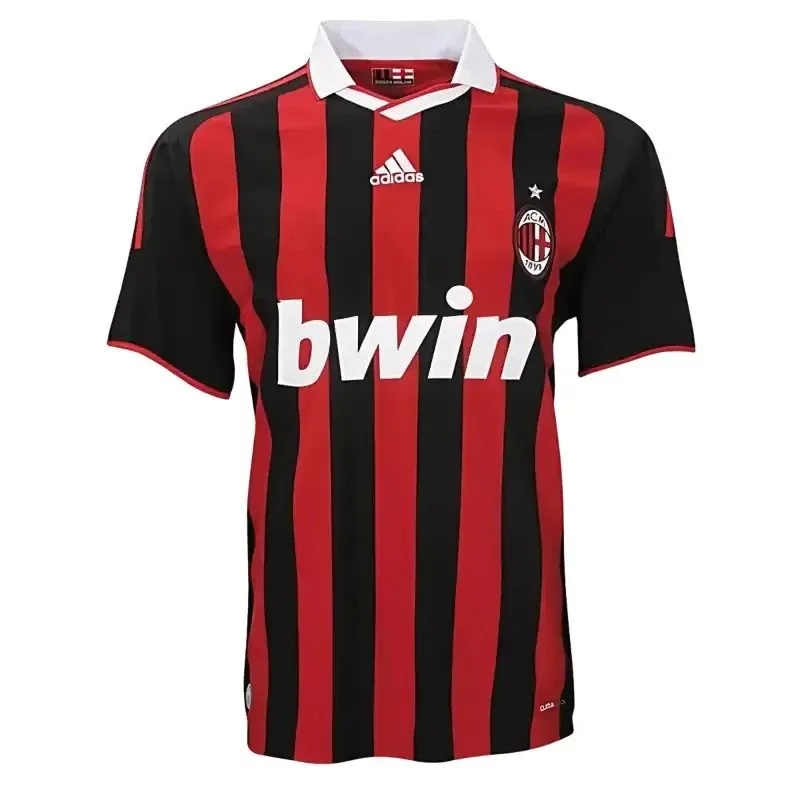
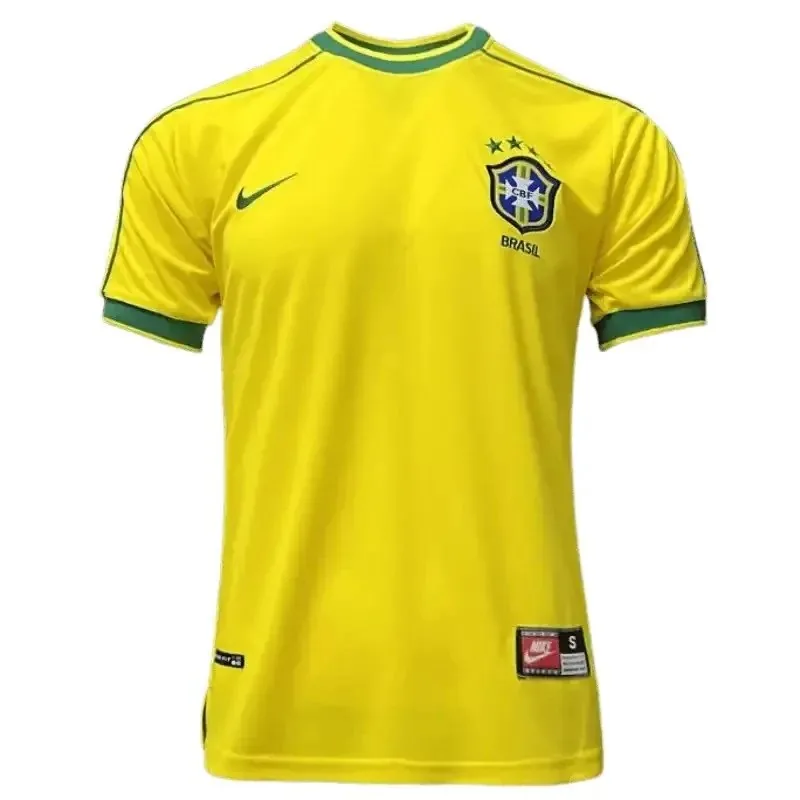
So: if a listing claims to reproduce a 1998, 2006 or 2009 shirt and the crest in the QC photo is a flat printed patch with a smooth face, the reproduction is not period-correct, regardless of how good the colours and the sponsor lettering are. It is not a scam and the shirt may still look fine at conversational distance — but you asked for a specific season, and the badge is the part that gives it away in a photograph. Our AC Milan 09/10 retro and Brazil retro are the kind of reproductions where this is worth checking, and the retro guide goes era by era.
Competition badges: heat-pressed, and how to prove it
The badge questions almost always concern sleeve badges — the competition marks that sit on the upper arm. On modern originals these are produced as separate silicone or woven pieces and pressed on with heat. They are not sewn.
The test is thirty seconds and works on any shirt, yours or one in a QC photo:
- Turn the sleeve inside out. Stitching visible on the inner face means sewn. A clean inner face with a faint ghost outline means pressed.
- Run a nail around the edge. A properly pressed badge has no lip anywhere. Any corner you can catch is a corner that will lift.
- Look at the badge face in raking light. Moulded silicone has depth and soft shadows in the relief; a printed imitation of a badge is flat under the same light.
Reps go both ways, and a stitched badge is not automatically the better one — a neat press beats a crooked stitch. What you are actually checking for is edge bonding, because that is the single failure mode.
What printing costs, on both sides
This is the part where the numbers are genuinely startling, and it is not the shirt that produces the gap.
- On the originals: name and number printing typically runs about €20–30, and a competition badge set roughly €15–25. Stack those on an authentic shirt and a fully customised one reaches around €200–205 — of which the customisation alone is a quarter.
- On this catalogue: the printing option adds roughly $3 to a $14.06 shirt.
Look at that as a ratio rather than a saving. The shirt itself is a manufactured good on both sides, so the gap there is a manufacturing gap. Printing is priced as a service by the official channel — a person, a press, a licence, a shop — and as a materials cost here. That is why customisation, not the shirt, is the widest proportional gap anywhere in this category, and why a customised shirt is the one purchase where the arithmetic is most lopsided.
Official figures verified against club stores in 2026; the reps figure is the current listing option and varies a little by seller and by whether badges are included. Official prices also move at each seasonal reset.
The ordering step that produces blank shirts
Everything above is useless if the shirt arrives with nothing on it, and there is one specific way that happens.
Adding printing is two steps, not one:
- Choose the printing option on the listing. It is a separate selection alongside size — not a checkbox that appears at checkout. If you pick the plain option, nothing else you do matters.
- Write the name and number in the note to the seller. This is the step people miss. Selecting the printing option tells the factory to print something; it does not tell them what. An order with printing selected and no note usually arrives blank — and because the order was placed as a customised item, putting it right afterwards is not straightforward.
Write it as plainly as possible: surname in capitals on one line, number on the next. If the shirt is for a specific player and season, say so — a good seller will use the correct font for that competition, and the font is one of the things that separates a shirt that looks right from one that does not. Our custom name and number guide covers the ordering flow; this page is the part about method and materials.
What to check in the QC photo
Printing is applied after the shirt is made, which means it is the one element you can still reject. Ask for these, and look at them in this order:
- The font. Competitions use their own typefaces and they change by era. A wrong font is the most visible error and the hardest to ignore afterwards.
- Spacing and centring. Numbers off-centre by a couple of centimetres are common and impossible to unsee once noticed.
- Edges. On heat-applied letters, look for a clean cut edge and no scorch halo around the lettering. A faint shiny rectangle around the name means the press was too hot or held too long.
- Badge corners. As above — any lifting corner will spread.
- The crest, for era. Thread or moulded, matched to the season claimed.
The QC photos guide explains how to request these specifically rather than accepting the default set.
Care: printing is the part that dies first
Nothing else on a football shirt fails as predictably. Every bonded method — vinyl, flock, silicone — sits on the surface of the fabric, and its three enemies are heat, agitation and direct ironing.
- Wash inside out, cold, gentle cycle. This one habit does most of the work.
- Air-dry. A tumble dryer is heat plus agitation, which is both enemies at once.
- Never iron the lettering directly. If the shirt needs pressing, do it from the reverse with a cloth over the area.
- Do not fold along a number. Silicone and vinyl crack along a hard crease that has been sat in for months.
Do all four and the printing outlasts the shirt. Skip them and the edges start lifting within a season — which, on a $3 print, is annoying rather than expensive, but it is also entirely avoidable.
Ready to order?
- Pick your shirt and your size — printing makes a shirt effectively non-returnable, so get the size right first.
- Select the printing option on the listing, not the plain one.
- Write the name and number in the note to the seller. Surname in capitals, number on its own line.
- Order through Kakobuy, or swap to any of the 15 agents we support from the product page.
- At QC, check font, centring, edges and badge corners before approving. This is the last point at which printing can be rejected.
New to agents? Start with how to use Kakobuy, then browse the football shirt catalogue. If you are also wondering whether the shirt arrives with its manufacturer mark, do reps jerseys have Nike and adidas logos answers that, and best Kakobuy finds collects the strongest picks across every category.
Frequently asked questions
Are World Cup and league badges heat-pressed or sewn on?
On modern shirts, almost always heat-applied rather than sewn. Competition badges are produced as separate silicone or woven pieces and pressed onto the sleeve with heat, which is why they sit slightly proud of the fabric but have no stitching around the edge and no thread visible on the inside of the sleeve. That last detail is the test: turn the sleeve inside out. Stitching means it was sewn; a clean inner face with a faint outline means it was pressed. Reps go both ways — some factories press, some stitch, and a stitched badge is not automatically better. What matters is that the edge is fully bonded with no lifting at the corners, because a corner that lifts is where the whole badge starts to come away.
Is the club crest printed or embroidered?
It depends entirely on which season you are buying. Modern shirts have largely moved to heat-applied crests — a moulded, slightly rubbery badge bonded to the fabric — because they are lighter and do not perforate a technical knit. Shirts from the 1990s and 2000s used embroidery, which you can feel as raised thread and see as stitch direction when the light catches it. That gives you a genuinely useful check on retro reproductions: if a shirt claims to be a 1998 or 2006 reproduction and the crest is a flat printed patch, the era is wrong, however good the colours are. Ask for a close QC photo of the crest and look for thread.
How much does name and number printing cost?
On the originals it is one of the most expensive small add-ons in football: name and number typically runs about €20–30, and a competition badge set another €15–25, which is how a fully customised authentic shirt reaches roughly €200–205 all in. On this catalogue, printing is a listing option that adds roughly $3 to a $14.06 shirt. That gap — a €25 service against a three-dollar one — is the single largest proportional difference anywhere in the reps category, larger than the gap on the shirt itself, because printing is priced as a service on the official side and as a materials cost on this one.
How do I actually add a name and number to my order?
Two steps, and the second one is the one people miss. First, on the listing, choose the option that includes printing rather than the plain version — it is a separate selection, not a checkbox that appears at checkout. Second, and this is the step that goes wrong: you must write the name and the number you want in the order note to the seller. Selecting the printing option only tells the factory to print something; it does not tell them what. An order placed with the printing option selected and no note usually arrives blank, and at that point the shirt is customised in the seller's eyes and not straightforward to put right. Write it as clearly as possible — surname in capitals, then the number on its own line.
Will the printing peel off in the wash?
It is the first part of any shirt to fail, and how you wash it decides how long it takes. All of the common methods — heat-transfer vinyl, flock, silicone — are bonded to the fabric surface rather than woven into it, so they are vulnerable to exactly three things: heat, agitation and direct ironing. Wash inside out, cold, on a gentle cycle, and air-dry rather than tumble-dry, and never put an iron directly onto lettering — press from the reverse with a cloth if you must. Do that and printing outlasts the shirt. Skip it and edges lift within a season. Embroidered crests are the exception and survive almost anything, which is one more reason retro shirts age better than modern ones.
Can I get patches for a shirt I already own?
Yes — competition badges are sold separately as pressed or woven pieces, and this is what people are asking when they say "where did you get the patches". You need a domestic heat press or an iron plus patience, and the risk is real: too much heat marks a polyester shirt permanently and there is no undo. If the shirt matters to you, either buy it with the badges already applied, or take it to a local shop that does shirt printing — most sports retailers that print names will also press a badge. Our view is that on a $14.06 shirt it is not worth the risk of ruining it at home; order it with the badges attached in the first place and let the factory press them.