
Best Reps Belts on Kakobuy
A belt is two products bolted together, and only one of them is your problem. The strap is a length of material you can shorten at home with a screwdriver and a punch — which makes belts the only category on this entire site where getting the size wrong is fixable. Everything that can go permanently wrong is concentrated in the other part: roughly a hundred grams of cast metal with a pin, a spring and a bracket hidden inside it. That is where a cheap belt fails, and it is the part every listing photo flatters. So the rule for this category is: trim the strap, judge the buckle. This guide ranks the belts worth buying on Kakobuy Drop — from $12.62 — then gives you the sizing method, the four buckle types ranked by how likely they are to disappoint you, and the one honest case for spending real money instead.
Which reps belts are actually worth buying?
Ranked by price, cheapest first. Every belt below was checked live before publishing, and the type of each one was confirmed from its own product photograph rather than its listing title — several of these titles say nothing more useful than "Leather Belt":
| Pick | Buckle type | Price |
|---|---|---|
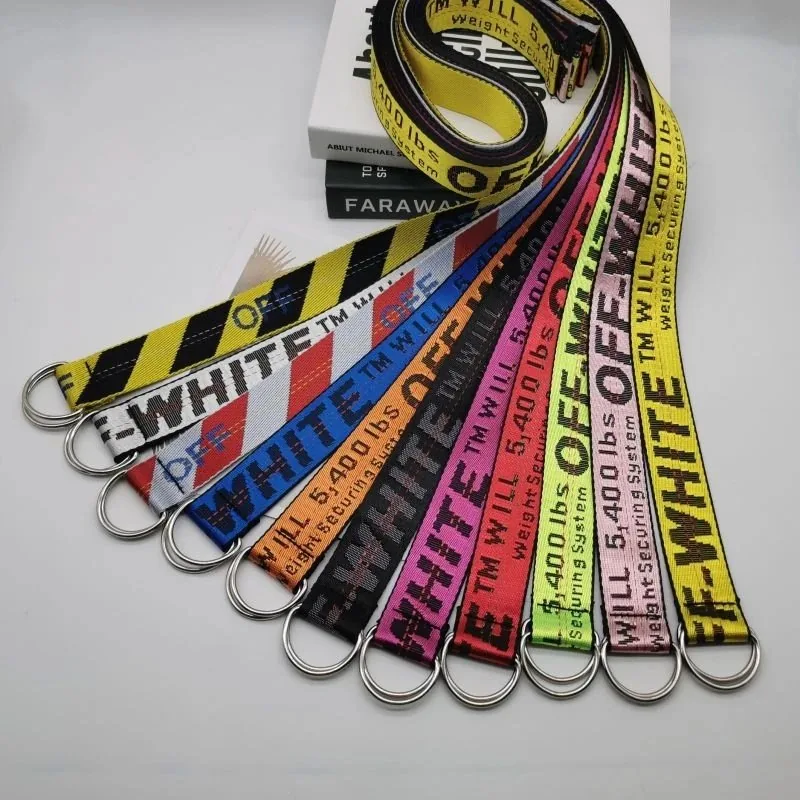
| Industrial Webbing D-Ring Belt | Double D-ring | $12.62 |
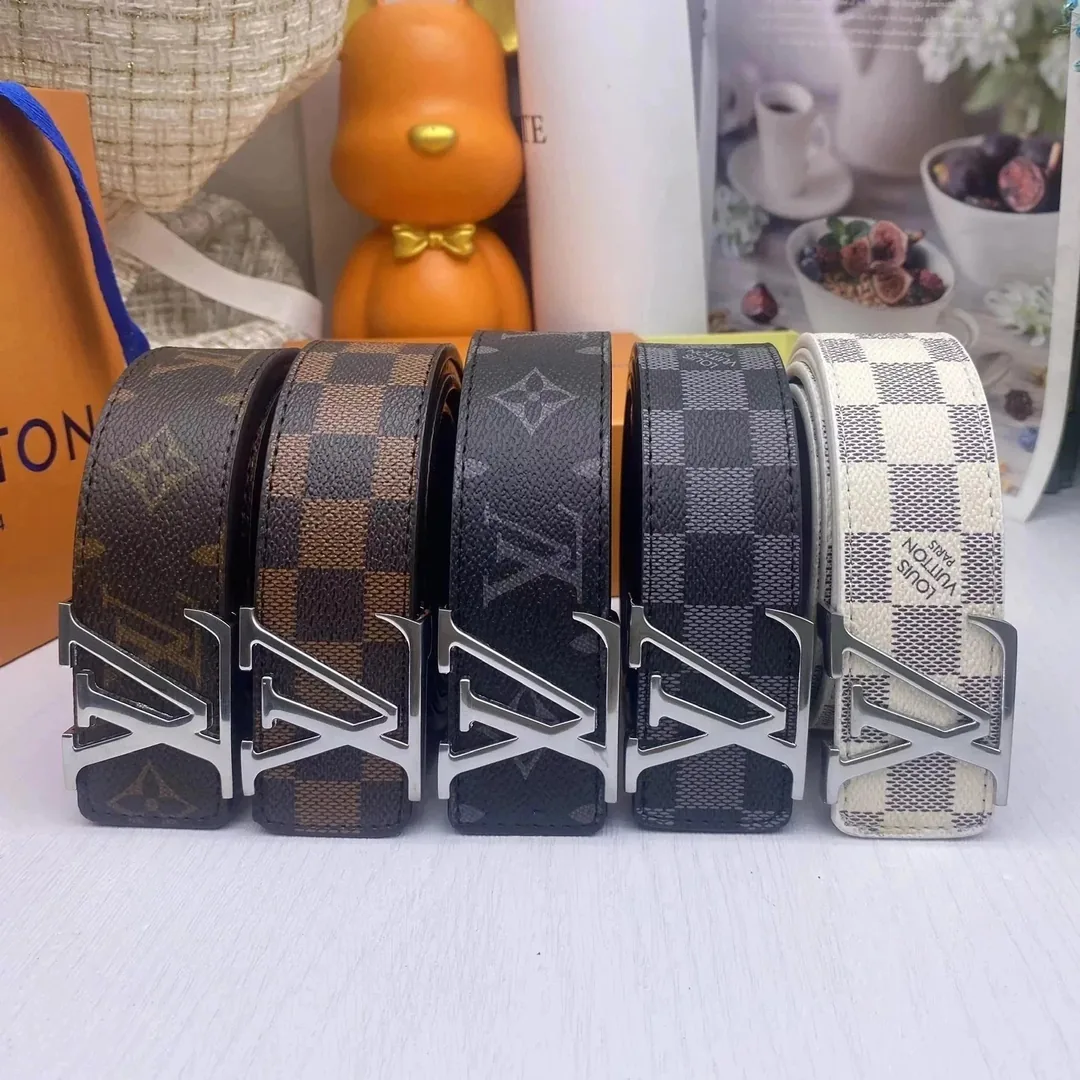
| Monogram Coated-Canvas Plaque Belt | Initials plaque | $13.81 |
| Pebbled Leather Monogram-Plaque Belt | Logo plaque | $14.24 |
| Reversible Check-Embossed Plaque Belt | Plaque, reversible | $15.82 |
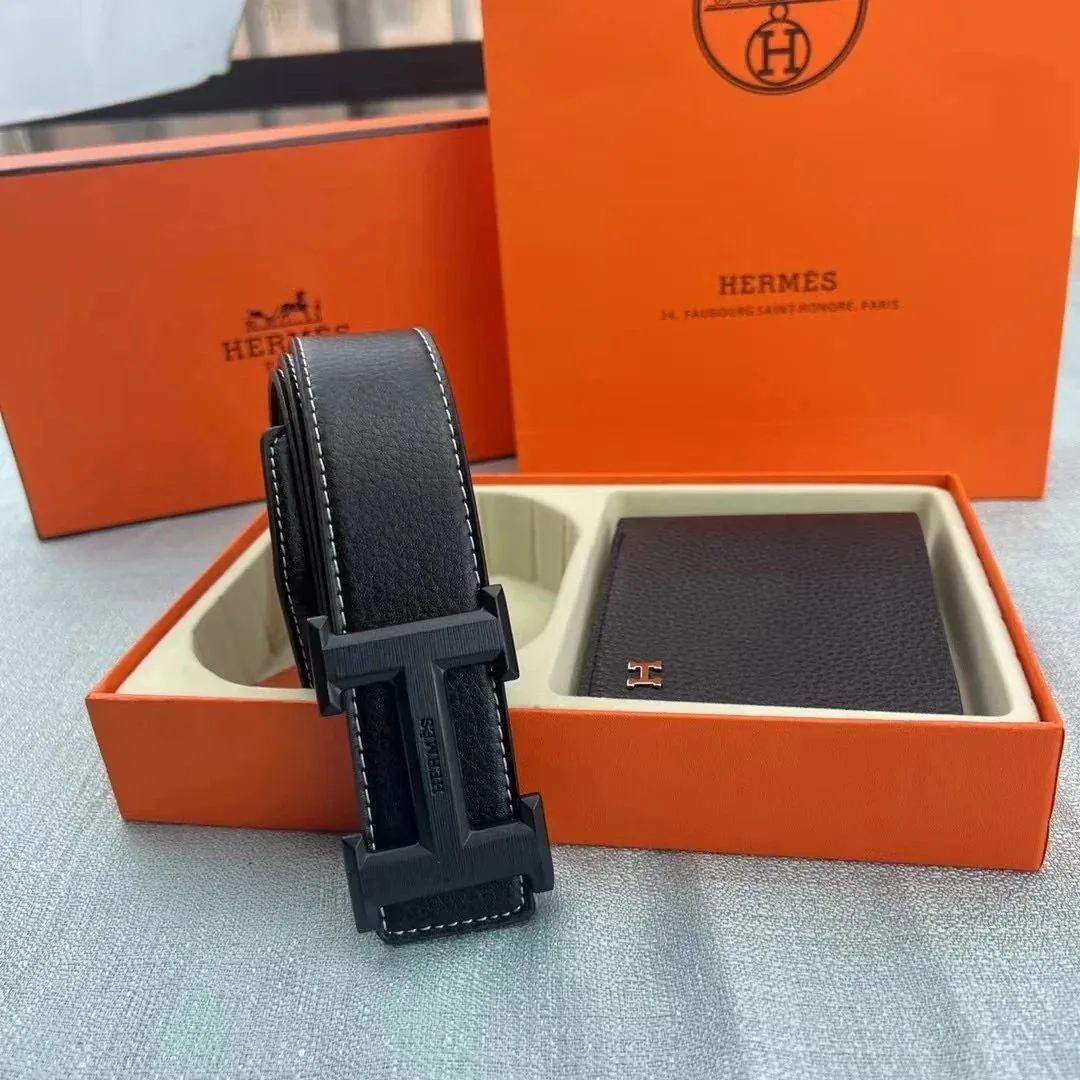
| Matte H-Buckle Belt & Wallet Set | Removable H | $17.07 |
| Women's Slim Crystal-Plaque Belt | Logo plaque | $20.48 |
| Women's Slim Ring-Buckle Belt | Double-ring | $20.61 |
| Signature Coated-Canvas Belt | Logo plaque | $23.81 |
| Leather Letter-Plaque Belt | Letter plaque | $28.60 |
| Reversible Calfskin Belt, Gold H Buckle | Removable H | $41.39 |
| Black Leather Belt, Silver Hardware | Prong | $47.78 |
| Mirror-Finish 40mm Reversible Belt | Plaque, reversible | $47.78 |
Browse all reps belts and accessories →
Prices are the live Kakobuy Drop prices at the time of writing and move with the catalogue. Brand names describe the style a piece is modelled on.
The buckle is the product — the brands say so themselves
You do not have to take our word for where the value sits in a belt. Hermès sells the two halves separately and prices them separately: a customisable reversible 32mm calfskin strap on its own is $610, while the H buckle sold together with that same reversible strap is $1,050. The leather is the cheaper half. Roughly $440 of a $1,050 belt is a piece of metal the size of a matchbox, and across the men's line the same kits run from $1,035 to $1,570 depending on which buckle you choose while the strap barely changes.
The mid-market says the same thing from the other direction. Hanks Belts, an American maker whose full-grain belts run $80 to $200, fixes its buckles with two screws precisely so you can swap them, and sells replacement buckles for $13 to $20. Buckle and strap are separable, serviceable, priced apart.
Which tells you exactly how to shop this page. The strap you can judge from a photo and fix with a screwdriver. The buckle is the thing you are actually paying for and the thing you cannot repair — so spend your attention there.
The four buckle types, ranked by how likely they are to disappoint
- D-ring webbing — the safest rep on this page. The industrial webbing belt at $12.62 has no mechanism whatsoever: the woven strap threads through two metal rings and holds on friction. There is no spring to seize, no pin to snap, no plated plaque to wear through. It is also the only type with no sizing problem at all, because you simply thread it to whatever length you want and let the tail hang. If you have never bought a rep belt and want to know whether the category is worth it, start here — it is the one where almost nothing can go wrong.
- Prong buckle — simple, load-bearing, easy to inspect. One moving part, one obvious failure point: where the prong meets the frame, and the holes it sits in. In the QC photo, look for a prong that sits flat in the hole rather than angling, holes that are cleanly cut rather than torn, and a keeper loop that is stitched rather than glued. The black leather belt with silver hardware at $47.78 is the dressiest example here.
- Removable H-style — clever, but the lock has to work. The buckle slides off, the strap flips to show the other colour, and one belt does the job of two. The matte H-buckle set at $17.07 and the gold H-buckle reversible at $41.39 are the same mechanism at two finishes and two price points — a neat illustration of how much of a belt's cost is the metal, since the leather is comparable. What to check: that the strap end genuinely locks into the buckle rather than sitting loose, and that both faces of the strap are properly finished, because you will be showing both.
- Plaque buckle — the best-looking and the most likely to let you down. Everything is hidden. Inside a plaque sits a sprung pin, and the plaque itself is usually joined to the strap by a single thin bracket. It is also the type where plating wear shows first, because the flat face rubs against everything. Most of the picks here are plaques — the coated-canvas monogram at $13.81, the pebbled leather monogram at $14.24, the signature coated canvas at $23.81, the letter plaque at $28.60 and the mirror-finish 40mm reversible at $47.78 — because that is what the look is. Buy them for the look, and judge the casting: crisp machined edges and clean lettering beat a soft, slightly melted-looking face every time.
One honest gap: this catalogue has no ratchet or automatic-buckle belts, so we have nothing to recommend and nothing to warn you about in that style.
Sizing: the two-minute method that removes the only real risk
Belt sizing is the single most common way people waste money on this category, and it is entirely avoidable, because a belt size is not your trouser size. The convention used by belt makers is one size up from your trousers — 36 trousers take a 38 belt — and two sizes up if you hang anything from it. Hanks puts the accuracy of that shortcut at over 95%.
The method that is actually exact takes two minutes:
- Lay flat a belt you already wear and like. Do not worry that it curves; measure through the curve.
- Start the tape where the leather meets the buckle — not at the tip of the buckle. The buckle is never part of the measurement.
- Measure to the hole you actually use. That number is your belt size.
- Belt sizes step in two-inch increments, so round up: 37 inches means buy a 38.
If you own no belt to measure, take the waist of the jeans you wear most and add two inches. And on a listing that gives you a length choice, always take the longer one. This is the part that makes belts different from every other category we have written about: slides and fitted caps punish you permanently for guessing wrong, but a belt that arrives too long is a five-minute job. Unscrew or slide off the buckle, trim the excess from the buckle end — never from the pointed tip, which is shaped and finished — and refit. If you would rather add a hole than shorten the strap, a leather punch is a few dollars and the standard spacing on a quality belt is one inch, six holes.
Reading the leather: look at the cut edge, not the face
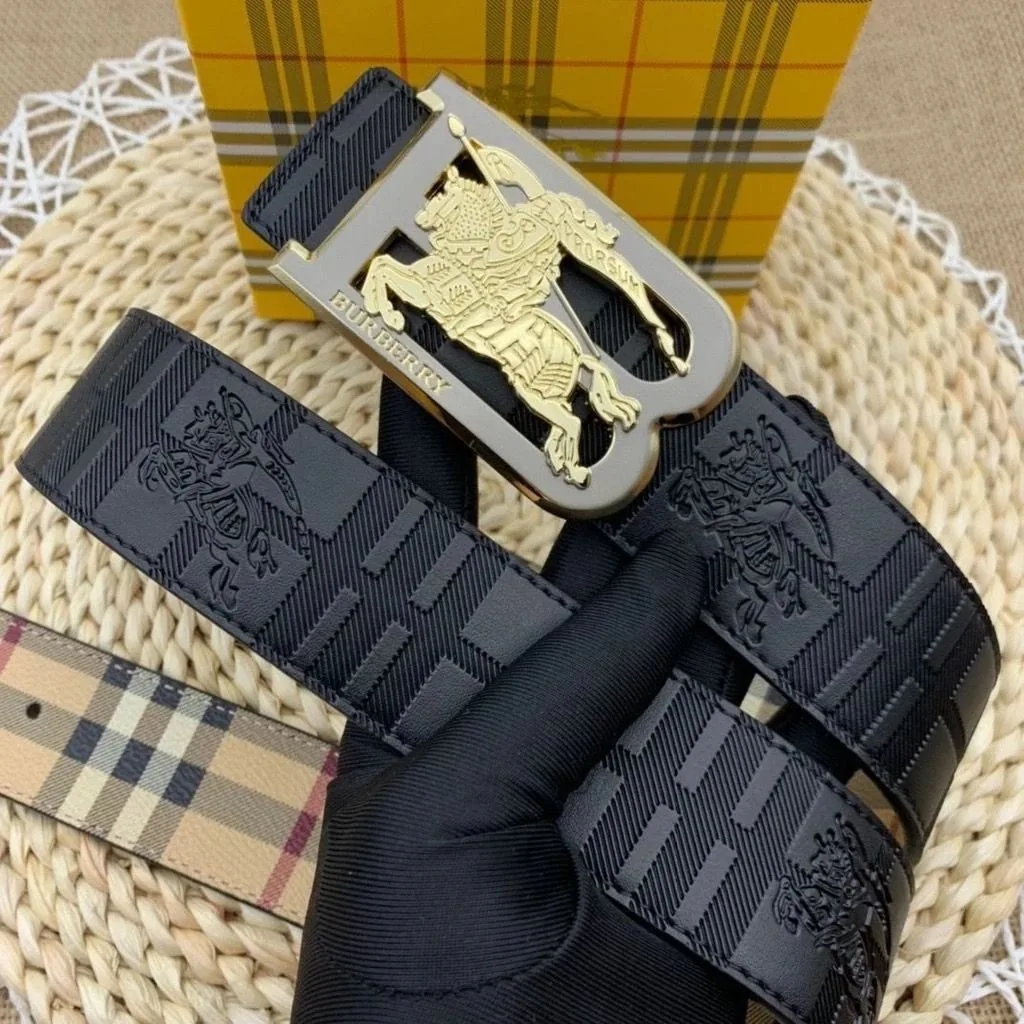
The face of a belt tells you almost nothing, because embossing and coating can make anything look like anything. The evidence is at the edges and the back.
- The cut edge. A solid hide has a dense, even cross-section. Bonded or split leather gives itself away as layers, a fibrous middle, or a surface coating sitting on a pale, paper-like core. Zoom the QC photo on the trimmed end.
- The edge finish. A burnished, rolled edge takes real work. A thick painted edge is quick, and it is also the easiest way to hide what the cross-section would otherwise show.
- The back face. Real hide has a fibrous, slightly suede-like nap. A uniform, plastic-smooth back is usually a coated fabric.
- The fold at the buckle. This is the only seam under load. Look for tight, even stitching that goes all the way through, not a glued fold with two decorative stitches at the sides.
- Weight. You cannot see it, but you can ask. Heavy full-grain belts are 13 oz and up in leather-trade terms; the difference is obvious the moment you hold both.
Terminology is worth understanding, because it is where the marketing lives. Under the US FTC leather guides (16 CFR Part 24), an unqualified claim of "leather" is only appropriate where a product is made of leather in all substantial parts; non-leather material made to look like leather is supposed to be disclosed as imitation, simulated, vinyl or plastic; and material containing ground, shredded, reconstituted or bonded leather should not be presented as leather at all — where the term "bonded leather" is used, the percentage of leather content is meant to be disclosed. The same guides treat misstatements about thickness, finish, serviceability and durability as deceptive. None of that is a claim about any particular listing — reps sellers write their own descriptions and rarely engage with any of it. It is simply the vocabulary you need to notice that "genuine leather", which sounds like a guarantee, is in ordinary trade usage one of the lower grades, below full-grain and top-grain. The cut edge settles the argument that words cannot.
Grades like full-grain, top-grain and split are industry usage, not legal definitions. The FTC rules above govern what can be called leather and what has to be disclosed, not how a hide is graded.
What you're actually saving
Only against verified figures — where we could not confirm an official price, we have left it out rather than invent one.
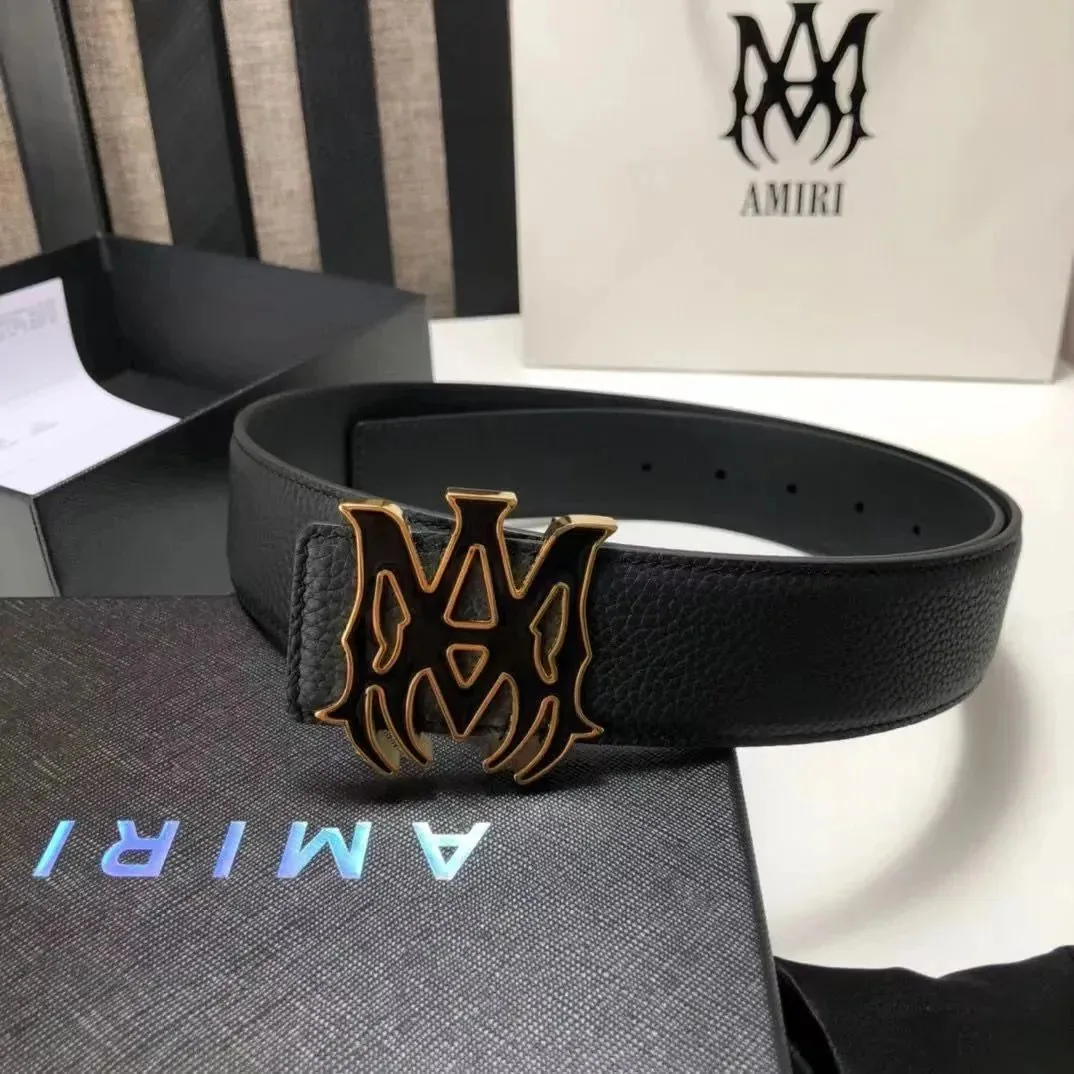
- Amiri belts retail at $450 to $550 across the current line — the MA Quad 4cm at $450, the Core Logo at $490, the chain belt at $530. Our pebbled leather monogram-plaque belt is $14.24.
- A Louis Vuitton LV Initiales 40mm reversible belt is $635. Our two 40mm reversible plaque picks are $13.81 and $47.78.
- The Hermès H buckle and reversible strap set is $1,050, with the men's line running to $1,570. Our gold H-buckle reversible is $41.39.
- The Off-White industrial belt sits around $205 to $225 — the cheapest designer belt we verified, and a webbing belt with no mechanism in it. Our webbing D-ring belt is $12.62.
- Belts ship light and flat. A belt rolls into the gap in a parcel you are already sending, which makes it one of the best things to add to a bigger order rather than buy alone.
Gucci, Dior, Burberry, Balenciaga and Chanel belts appear in this catalogue as styles, but every official and authorised-retailer page we tried was blocked, so we have deliberately published no retail figures for them rather than guess. Chrome Hearts has no official online store at all, so any figure you see quoted for it is a resale price.
The honest case for buying a real belt instead
Every category guide we write has a line where we say "buy the real one", and for belts that line is not about safety — it is about arithmetic. Hanks Belts sells an American-made, solid full-grain 13 oz belt for $89, 1.5 inches wide, with a screw-fixed buckle you can change and a hundred-year warranty. That is less than the price of two of the picks on this page.
The failure mode that maker describes in its own product copy is exactly the one you should expect from the cheapest end of any belt market: department-store belts that crack and break at the holes, stretch and sag. That is what thin, split or bonded leather does under daily load. It is not a rep-specific problem — it is a cheap-belt problem, and reps are cheap belts with better-looking hardware.
So the fork is genuinely clean, and unusually clean compared with our other categories:
- If you want the look — a plaque, a monogram, a check, an H — buy the rep. A belt is worn folded around your waist with a jacket over half of it, the visual return per dollar is enormous, and at $13 to $48 you can own several looks for the price of nothing.
- If you want a belt that outlives your trousers — one belt, every day, for years — the $89 full-grain option is straightforwardly the better purchase, and nothing on this page competes with it on that specific claim.
Most people want both, which is fine: a real belt for daily wear and one or two rep plaque belts for the outfits that need the hardware. What we would not do is buy a rep expecting the durability, or a $600 designer belt expecting anything different from the $89 one in leather terms.
A note on trademarks
Belts are the mirror image of the bags argument. There, our advice was that blank beats branded, because an unbranded bag carries no infringing mark and is also the easiest thing to get a perfect QC on. A logo-plaque belt is the opposite: the mark is the product, in the same way it is on a cap. Customs authorities act on registered trademarks recorded with them, so a piece whose value is its plaque carries a different risk profile from a plain strap — which is one more reason the plain webbing and prong belts at the top and bottom of our list are worth a look. We are describing how the categories differ, not giving legal advice, and we use "-style" wording throughout because that is what these pieces are.
Ready to order?
- Measure a belt you already own using the method above. This is the single step that decides whether you are happy with the parcel.
- Pick a type — the webbing D-ring belt at $12.62 is the lowest-risk first buy, the reversible H-buckle at $41.39 gives you two belts in one.
- Click through to Kakobuy, or swap to any of the 15 agents we support from the product page.
- Choose the longer length when there is a choice. You can remove length; you cannot add it.
- When the QC photo arrives, zoom three things: the cut edge, the stitching where the strap folds around the buckle, and the plaque face for casting sharpness. Then approve and pay shipping.
New to agents? Start with the full how to use Kakobuy guide, then browse all accessories, or see the wider best Kakobuy finds across every category. Since belts pack flat, our shipping guide shows how to slot one into a bigger order for almost nothing, and the QC photos guide explains what to ask for if the first photo does not show the cut edge.
Frequently asked questions
How much do reps belts cost on Kakobuy?
From $12.62 for a woven D-ring belt up to about $48 for a heavy 40mm plaque belt, with most picks landing between $15 and $30. Belts are one of the cheapest things on this site to try and one of the lightest to ship — a leather belt rolls into a corner of a parcel you were already sending. For scale, the designer originals we could verify run $450 to $550 at Amiri, $635 for a Louis Vuitton 40mm reversible, and $1,050 for the Hermès H buckle and strap set. But the number that matters most on this page is a different one: $89, which is what a real full-grain American belt costs. Read the last section before you decide.
What belt size should I order?
Not your trouser size. The industry convention is one belt size up from your trouser size — 36 trousers take a 38 belt — and two sizes up if you hang anything off it. The accurate method takes two minutes: lay out a belt you already wear, put the tape where the leather meets the buckle (do not include the buckle itself), and measure to the hole you actually use. That number is your belt size. Belt sizes step in two-inch increments, so if you measure 37 inches you buy a 38. If you have no belt to measure, take the waist of the jeans you wear most and add two inches. And when you are between options on a listing, always take the longer one — see the next answer for why.
What if the belt arrives too long?
You fix it in five minutes, which is the whole reason belts are a low-risk category. Most reps belts ship long on purpose. Take the buckle off — on plaque and screw-fixed buckles it comes away with one or two screws, on H-style buckles the strap simply slides out — trim the excess from the buckle end, not the pointed tip, then refit. If you need an extra hole instead, a leather punch costs a few dollars and the standard spacing is one inch. What you cannot do is add length. So the rule for this category is simple: buy long, never short.
Which buckle type is safest to buy as a rep?
A D-ring webbing belt, by a distance. It has no mechanism at all — the strap threads through two rings and locks on friction, so there is nothing to seize, snap or lose its plating in the way a spring-loaded plaque can. Next safest is a simple prong buckle, where the only load points are the prong root and the holes. The riskiest is the plaque buckle, because the pin, the spring and the thin bracket joining the plaque to the strap are all hidden inside a shape that photographs beautifully. Removable H-style buckles sit in between: the mechanism is simple, but the strap has to lock properly or it will creep. One thing to note about this catalogue: there are no ratchet or automatic buckle belts in it, so this guide does not cover them.
How do I tell real leather from bonded leather in a QC photo?
Look at the cut edge, not the face. A solid hide shows a dense, even cross-section; bonded or split leather shows layers, a fibrous middle, or a coating sitting on a paper-like core. Then check three more things: the edge finish (a burnished, rolled edge takes work, a thick painted edge often hides what is underneath), the back face (fibrous suede-like nap versus a plastic feel), and the stitching where the strap folds around the buckle, which is the one seam that actually carries load. Terminology is worth knowing too. Under the US FTC leather guides, an unqualified claim of "leather" is only appropriate when the product is made of leather in all substantial parts, and material containing ground, shredded, reconstituted or bonded leather should not be presented as leather at all — if the term "bonded leather" is used, the percentage of leather content is supposed to be disclosed. Reps listings rarely say any of this, so the cut edge is your evidence.
Will a cheap buckle lose its plating?
Often, yes, and it is the most common way a cheap belt starts looking cheap. A buckle spends its life rubbing against a shirt tail, a car seat belt and the edge of a desk, so any thin coating on a zinc or brass core wears at the high points first — usually the corners of a plaque and the tip of a prong. There is no way to read plating thickness from a photo. What you can read is the finish: a flat, slightly soft-edged casting with visible seam lines is a cheaper piece than a crisply machined one, and a buckle that looks unusually light-coloured in a photo is often thin plating over a pale base. The practical answer is to accept it as a wear item, buy the type you like, and keep the buckle away from perfume and sweat — or buy a belt with a screw-fixed buckle so a worn buckle can simply be replaced.