
Best Reps Jeans and Denim on Kakobuy
Every other guide on this site teaches you to look. Judge the embroidery on a cap, the buckle casting on a belt, the paint on a Gallery Dept hoodie, whether the two halves of a tracksuit match. Denim is different, and the difference is the whole point of this page: the most likely way a pair of jeans disappoints you is not visual at all — it is dimensional. They arrive exactly as photographed and they do not fit. But denim is also the only thing in this catalogue whose size is stated as a physical measurement rather than a letter, which means it is the only category where you can check the claim before the parcel leaves China. This guide ranks the denim worth buying on Kakobuy Drop — from $22.37 — then shows you the three measurements to demand, what our own listings' size charts actually say when you read them properly, and what we found when we opened every photograph.
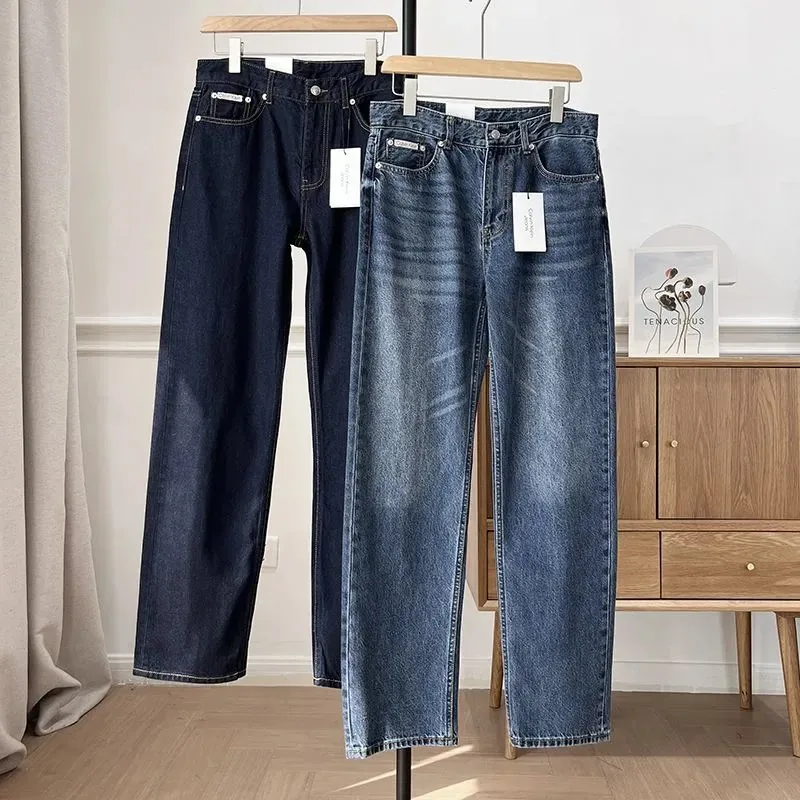
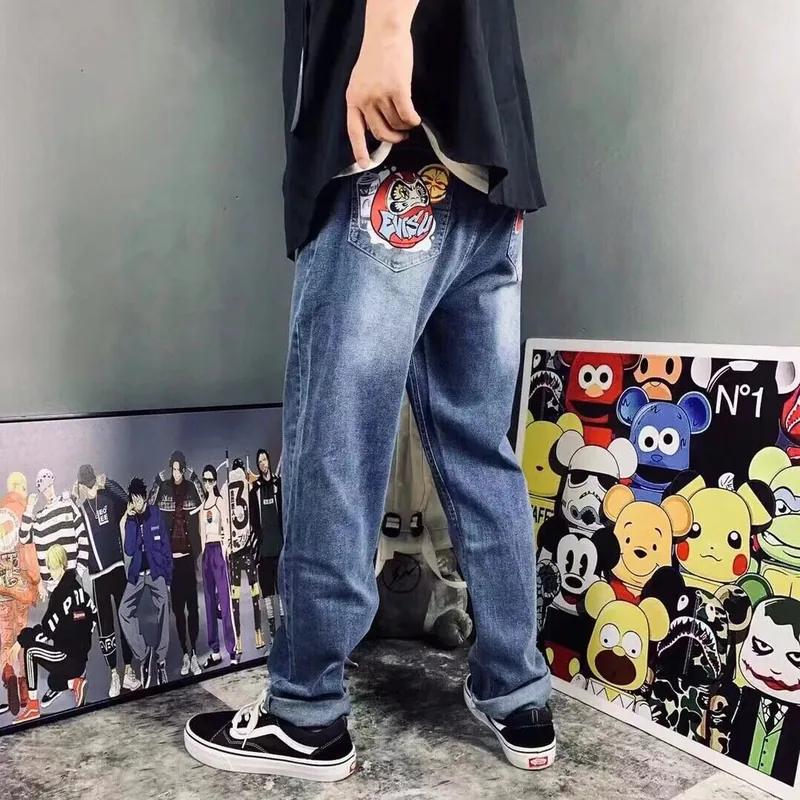
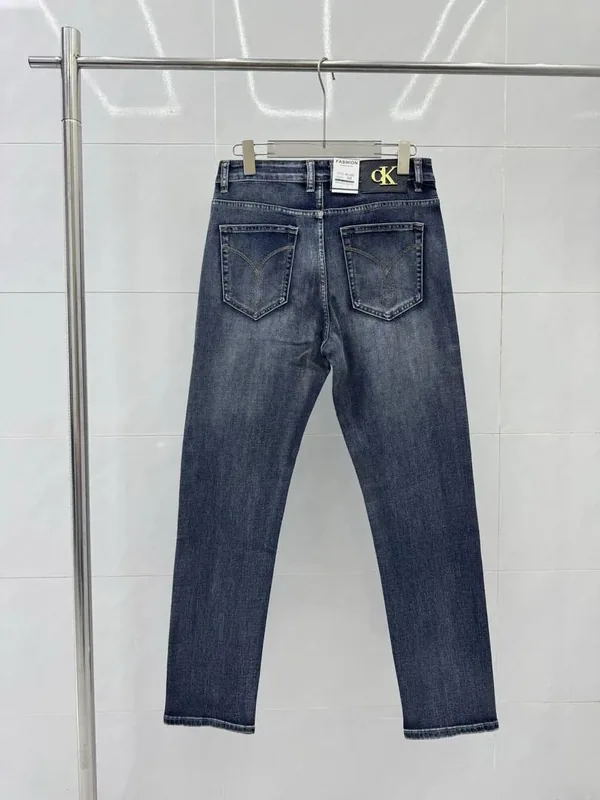
Which reps jeans are actually worth buying?
Ordered cheapest first. Every pair below was checked live before publishing and, more importantly, confirmed from its own product photograph rather than its title — for reasons that become obvious further down this page. Where a listing's title was wrong about the colour, the gender or the brand, we have described what the photograph actually shows.
Naming note: we describe these as “-style” because that is what they are. Where a listing title claimed a brand the photograph did not support, we have said so rather than repeating the claim.
Why jeans are the one thing here you can verify before it ships
Think about what a size label actually tells you in each category on this site. A hoodie says L. A cap says one size. A pair of slides says 42. None of those is a measurement — they are all a manufacturer's opinion about a body, compressed into a symbol, and the only way to test the opinion is to receive the garment and put it on.
Jeans break that pattern. A pair tagged W32 L30 is making two specific, falsifiable claims in inches about two specific distances on the finished garment. That is unusual and it is useful, because a claim in units can be checked with a tape measure by somebody who is not you, in a warehouse, before you have paid for freight.
This is the practical rule the rest of the page builds on: for denim, the QC request is not a photograph of the garment, it is a photograph of the tape measure on the garment. Three shots settle almost everything.
- Waist. Fasten the jeans, lay them flat, run the tape across the very top of the waistband from side seam to side seam, and double the result. This is the number that decides whether you can do them up, and it is the one to buy on.
- Inseam. From the crotch seam straight down the inside of the leg to the hem. Say the word “inseam” explicitly — see the section below on why.
- Leg opening. Straight across the bottom hem, doubled. This is what actually determines whether you are getting the silhouette in the photograph, and it is the measurement nobody thinks to ask for. A “wide leg” with a 19cm opening is a straight leg.
Compare that with the other categories where we have written about sizing, because the contrast is the point. Belts are the one thing you can fix after it arrives — too long, and you trim the strap. Shorts largely self-correct at the waist because of the drawcord. Tracksuits are the worst case, because one size label has to satisfy two independent body measurements and there is no adjustment at all. Denim sits in a fourth position that is genuinely its own: you cannot fix it afterwards, but you are the only category that can prove it beforehand. Use that.
The tag number is not a measurement
The gap above is not unique to one supplier, and it is worth understanding as a general property of denim rather than a fault. Waist sizing on jeans has drifted from a literal measurement to a marketing convention across the whole industry, and it drifts in a predictable direction: labels read smaller than the garment. Anyone who has bought a 32 from three different Western brands and found three different waists has met the same phenomenon.
Two things follow for buying reps specifically. First, your usual tag size in a Western brand is a weak starting point and a terrible finishing point — it encodes one brand's drift, and you are now buying from a different factory with a different one. Second, and more usefully: measure a pair of jeans you already own and like. Lay them flat, take the three numbers above, and buy to those, not to the label they carry. This is the single highest-value thirty seconds in the whole process, and it converts an unfamiliar supplier's chart into something you can actually compare against.
Note also that our catalogue does not use one system. The Carhartt-style pair is sized S to XXL. The ERD-style pair is sized 28 to 34. Others give no chart at all. There is no site-wide denim size standard to learn, which is another way of saying that the measurements are the only thing that transfers between listings.
The one spec nobody publishes
Denim weight is quoted in ounces per square yard, and it is the number that decides more about how a pair of jeans feels than the cut does. The rough bands: lightweight denim, under about 12oz, is soft immediately, drapes readily and wears out sooner; mid-weight, roughly 12 to 14oz, is where most commercial five-pocket jeans sit and is the safe default; heavyweight, from about 16oz upward, arrives rigid enough to stand up on its own, takes months to break in, and lasts for years once it does.
You will almost never be told which you are getting. We searched every listing in our catalogue — 28,028 products across seven source files — for any declared fabric weight. Exactly one listing declares it: the Jcaesar straight-leg pair at $95.89, whose title specifies 14oz denim. One in twenty-eight thousand.
We are not holding that up to embarrass anyone; it is simply how this market describes its products, and it is the same reason no listing tells you the fabric weight of a hoodie either. But denim is the category where it matters most, so here is how to read it off a photograph when nobody tells you:
- Look at how it hangs on the hanger. Heavy denim falls in stiff vertical columns and the legs stay apart. Light denim collapses inward and puddles.
- Look at the fold. Heavy denim creases in hard, sharp lines that hold. Light denim wrinkles softly and randomly.
- Look at the cuff, if there is one. A turn-up on heavyweight denim is thick and reluctant and stands away from the leg — visible on both rigid Evisu-style pairs in the table. A cuff on lightweight denim lies flat.
- Look at the hem stitching pucker. Heavy fabric resists the machine and the hem shows slight waviness; light fabric hems dead flat.
And a practical consequence: if you are buying a rigid, dark, unwashed-looking pair, expect it to be uncomfortable for two weeks and expect it to shrink on first wash unless it has been pre-shrunk. That is not a defect. It is what that fabric is.
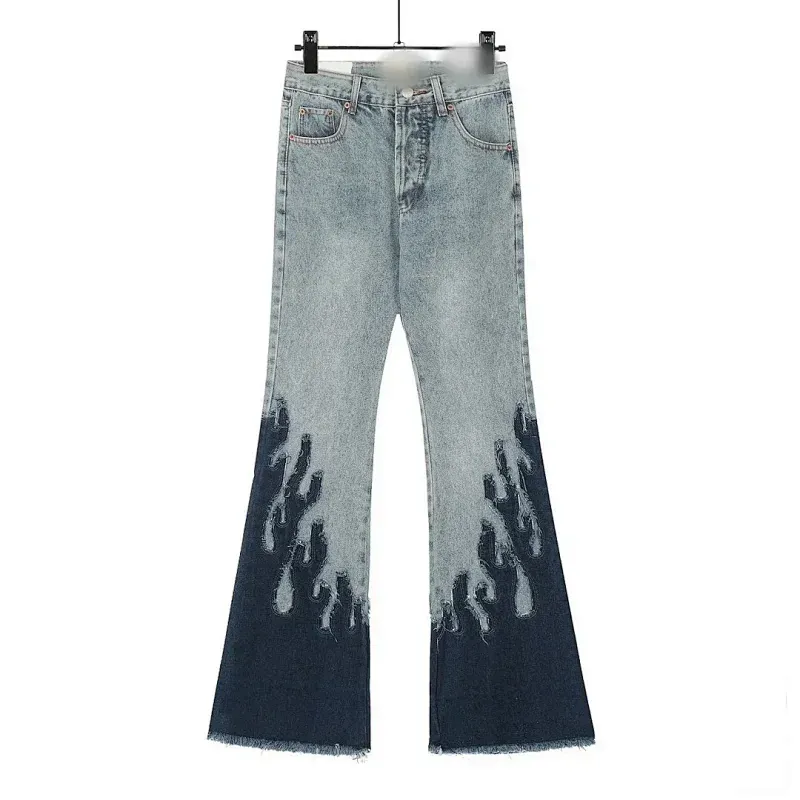
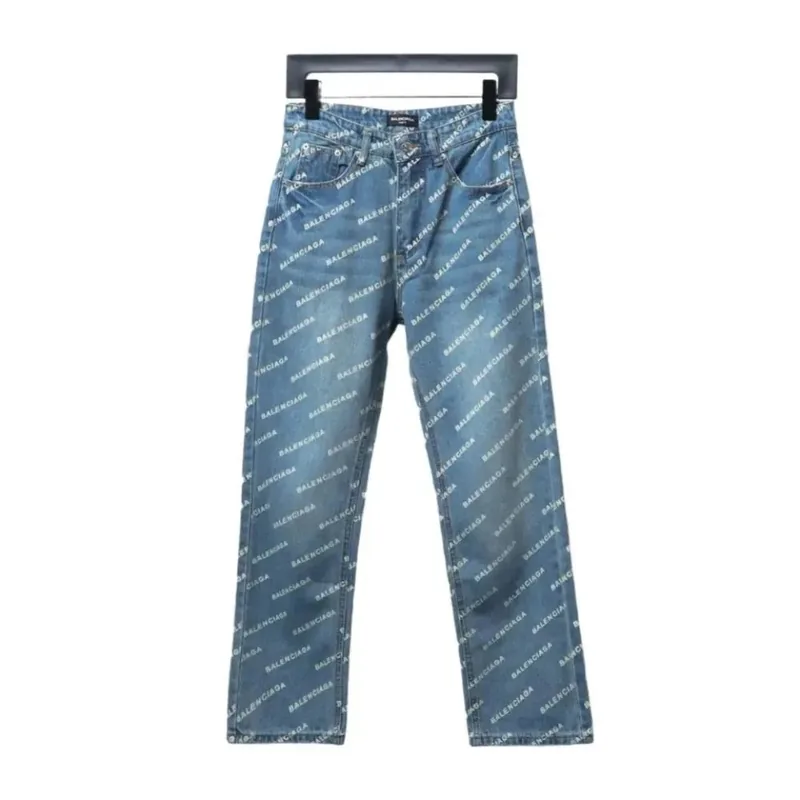
Where cheap denim actually fails
Once the fit question is settled, the remaining failure points on a pair of jeans are unusually concrete — and unlike the lining of a pair of shorts or the lens of a pair of sunglasses, all of them are visible in a normal QC photo. This is the good news about denim. Ask for these four close-ups:
- The rivets and the shank button. These are the parts under real load. A good rivet sits flush and tight with no rotation and no cracking of the fabric around it; a bad one is a thin stamped cap that spins when you touch it. The waist button should be a solid two-piece shank, not a flat stamped disc, and it should not wobble. This is the same “judge the casting” test our belts guide applies to buckles, and for the same reason: it is the one metal part that will fail first.
- The zip. Ask for it half open. A branded pull is a good sign, a smooth run is a better one, and a fly that gapes when closed means the whole front assembly was sewn under tension.
- The inside of the waistband and pocket bags. This is where corners get cut, because nobody photographs it. You want clean overlocking, no raw edges, and pocket bags in a proper woven cotton rather than thin gauze. Turn one out.
- Where the wash meets the seam. On any distressed or faded pair, look at whether the fading pattern respects the construction — real wear concentrates at the seat, the thigh fronts, the knee and the hems, and it fades around seams rather than straight across them. A pattern that runs over a seam untouched was printed or sprayed onto flat fabric.
That last one is worth separating from the angle we take in the Amiri guide, where the argument is that the fade is the product and the failure mode is a pair that looks too new. Here the point is narrower and mechanical: on any jean, whatever the brand, a wash that ignores the seams was not put there by a process that understood the garment. It is a construction test, not an aesthetic one.
Where to go next
New to agents? Start with the full how to use Kakobuy walkthrough, and read how QC photos work before your first order — on this page more than any other, the QC step is the whole game. For the rest of the wardrobe, the t-shirts guide covers the cheapest way in, shorts and tracksuits cover the rest of the lower half, and belts is the natural companion to this page. On the brand side, Amiri and Gallery Dept both sell denim as their signature product and both are worth reading before you spend three figures here. Everything across every category is collected in best Kakobuy finds, and you can browse all pants and jeans directly.
Frequently asked questions
How much do reps jeans cost on Kakobuy?
Our denim runs from $22.37 for a Calvin Klein-style wide-leg pair to $169.39 for a Dsquared2-style cuffed carrot fit, with most of the good picks landing between $50 and $80. That makes jeans the most expensive everyday category in our catalogue — a football shirt is a flat $14.06 and a t-shirt starts under $7. There is a reason for that. Denim uses three to four times the fabric of a t-shirt, that fabric is heavy, and a pair of jeans carries hardware, a fly, a waistband, belt loops and eight or more panels. It is the most constructed garment most people own. It is also, for the same reason, the one where getting the size wrong costs you the most money.
What size reps jeans should I order?
Do not order from the tag number. Order from the flat measurements, and if the listing does not publish them, ask your agent to measure the pair before it ships. Jeans are the only garment here whose size is expressed as a physical dimension rather than a letter, which means the claim is checkable — a tape laid across the waistband and down the inside leg settles it in thirty seconds. That matters because the tag number frequently is not the measurement. One flared listing in our own catalogue is tagged 28, 30, 32 and 34, and its own size chart gives the corresponding body measurements as 76, 80, 84 and 88 centimetres — 76cm is 29.9 inches, not 28. Buy the number you measure, not the number printed on the patch.
What measurements should I ask for in the QC photos?
Three, and they take one photo each. First, the waist: tape laid flat across the top of the closed waistband from side seam to side seam, then doubled. Second, the inseam: from the crotch seam straight down the inside leg to the hem — and make sure it is the inseam and not the outseam, because our own Carhartt-style listing publishes an outseam of 102 to 110cm, which is about forty inches and would panic anyone reading it as an inside leg. Third, the leg opening: straight across the hem, doubled. Waist tells you whether it fastens, inseam tells you whether you need a tailor, and leg opening tells you whether it is the silhouette in the photograph. No other category on this site gives you a number you can verify before you pay.
What does denim weight in oz actually mean, and why does no listing say?
Denim weight is the weight of one square yard of the fabric, and it is the single spec that determines how a pair of jeans drapes, how hot they are and how long they last. Broadly: under about 12oz is lightweight and soft from day one, roughly 12 to 14oz is the mid-weight most commercial jeans use, and above about 16oz is heavyweight denim that starts rigid and breaks in over months. Almost nobody in this market publishes it. When we searched all 28,028 listings in our own catalogue, exactly one declared a fabric weight — a straight-leg pair described as 14oz denim. One, out of twenty-eight thousand. That is not a criticism of one supplier; it is the state of the category. If drape matters to you, ask, or read it from the photograph: heavy denim hangs in stiff vertical columns and holds a fold, light denim collapses and creases softly.
Are reps jeans listings accurate about what they are selling?
Often not, and denim is the worst category we have audited. We opened the product photograph of 32 candidate listings for this guide and 9 of them did not show what the title said. Two were not jeans at all — one titled "Margiela Jeans" pictured a pair of pink suede trainers in a shoebox, and one titled "Mihara Jeans" pictured a single sneaker. One titled with a workwear brand pictured a polo shirt two-pack. Three carried a workwear brand name but showed no workwear branding at all, one of them covered in cross patches belonging to an entirely different label. Treat the title as a search term and the photograph as the product. That rule applies across this site, but nowhere is it as necessary as here.
Which reps jeans are the safest buy for a first order?
A mid-blue straight or relaxed cut with a visible size chart in the listing, in the $30 to $60 band. Straight and relaxed fits are the most forgiving of a measurement error because they are not fitted anywhere except the waist, and a mid-blue wash hides the two things cheap denim gets wrong most often — blotchy hand-sanding and grey-cast indigo. Save the flares, the skinny fits and the raw rigid pairs for a second order once you know how a given supplier sizes. A flare buys you a specific problem: you cannot shorten it from the hem without cutting through the widest part of the taper, which is the same trap our Gallery Dept guide describes.