
Best Gallery Dept Reps on Kakobuy
Every other guide on this site teaches the same QC method: get the photo, open the official product page next to it, look for the differences. That method does not work on this brand, and not because the reps are unusually good. It does not work because Gallery Dept's own product descriptions say the original has no fixed appearance. The brand's copy describes a "patent wash process that uses unique fading techniques for each piece, inclusive of logos and graphics", and its painted garments as "hand-painted by artisans at our Los Angeles maison". Two genuine pieces off the same rail do not match each other. So there is nothing to compare your photo to — and the check has to become a different one. This guide ranks the 17 Gallery Dept pieces worth buying on Kakobuy Drop, from $17.42, and then replaces the compare-to-reference test with one that actually works here.
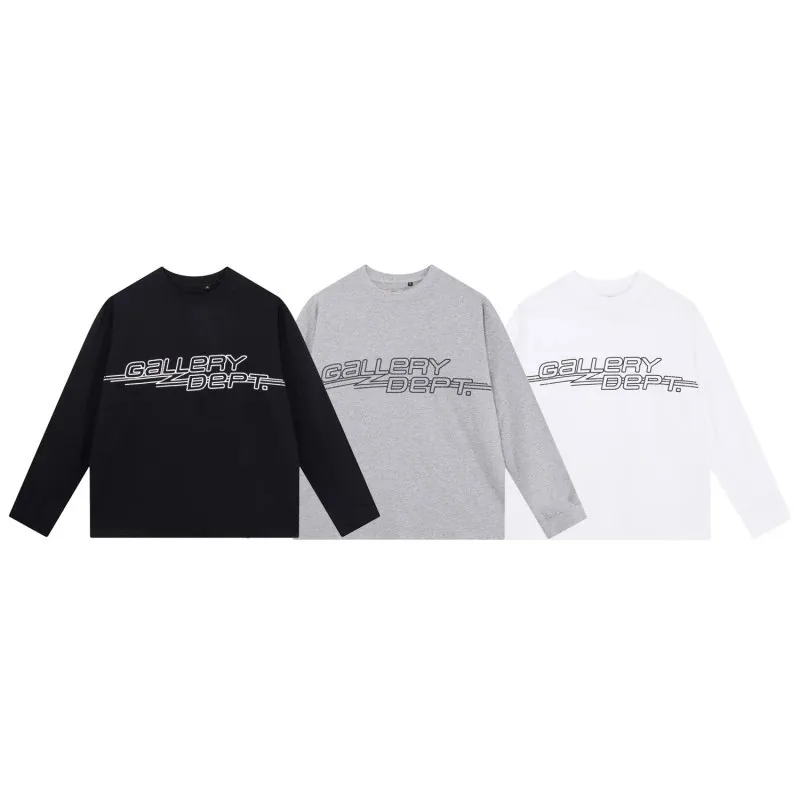
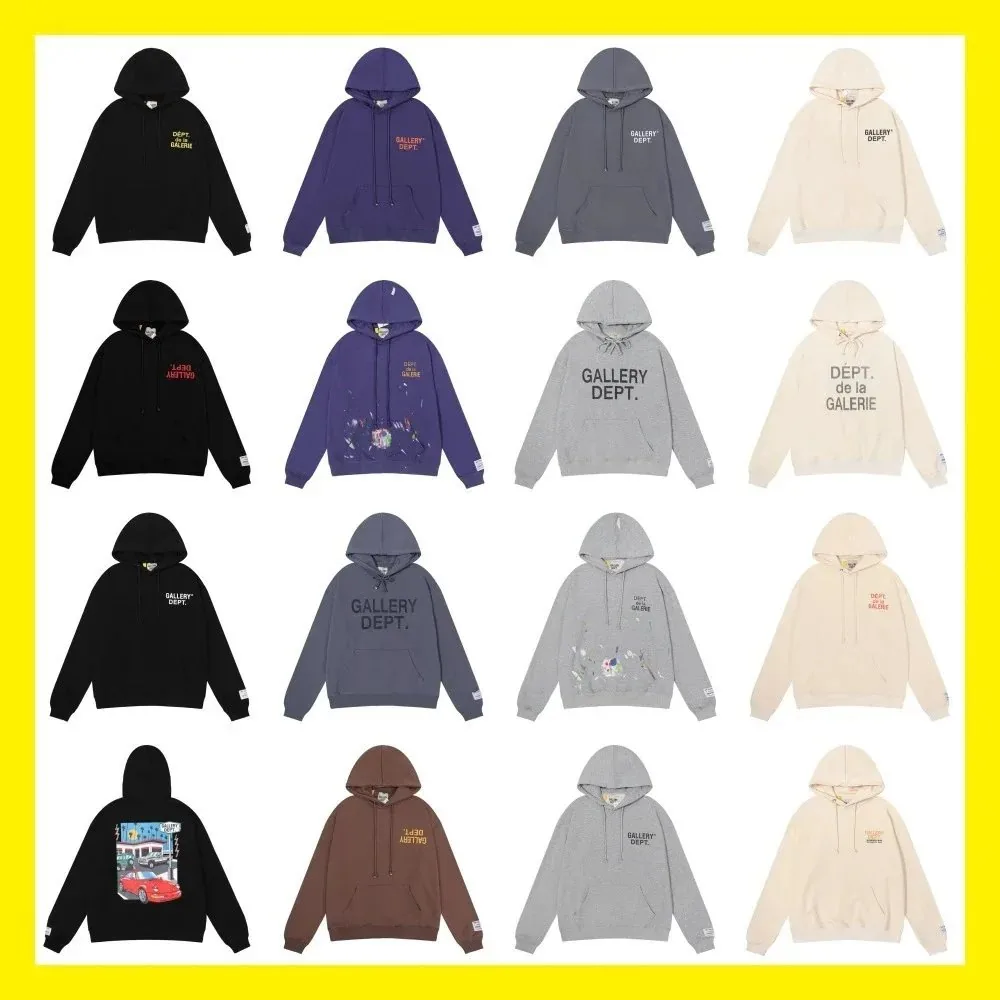
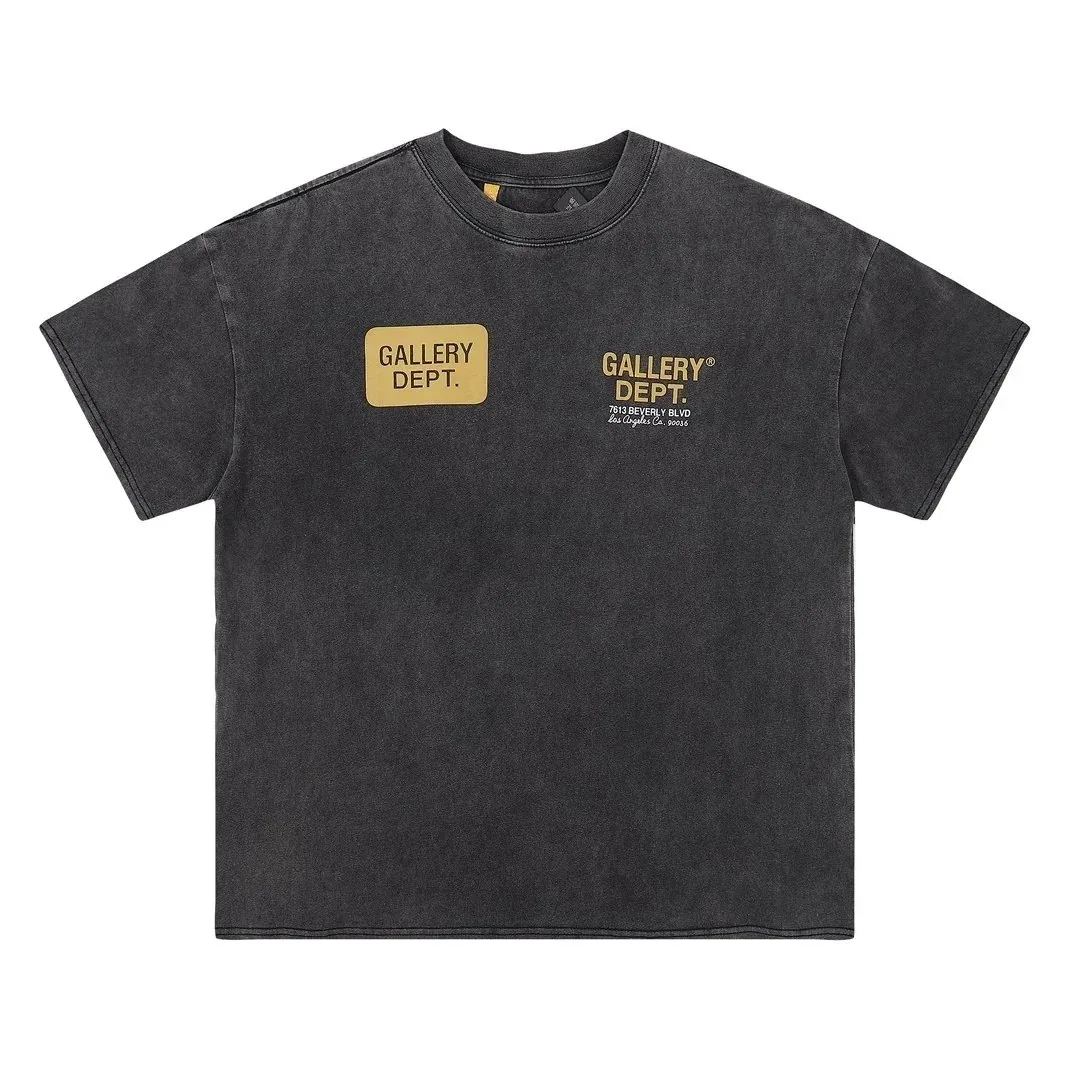
Which Gallery Dept reps are actually worth buying?
Ranked by price, cheapest first. Every listing below was checked live before publishing and identified from its own product photograph rather than its title — which on this batch was not optional. Of the 25 listings in our catalogue matching this brand, eight are mislabelled or duplicated: one "hoodie" is a long-sleeve tee, another "hoodie" is a set of shorts, a "tracksuit" is a sleeveless vest, a "t-shirt" is a hoodie, and two pairs are the same product listed twice at different prices. The descriptions below are what the photographs actually show.
| Pick | Type | Price |
|---|---|---|
| Speed-Logo Long-Sleeve Tee, 3 colours | Long sleeve | $17.42 |
| Splatter & Logo Hoodie, 4 colours | Hoodie | $17.58 |
| Washed Beverly Blvd Patch Tee | Tee | $18.98 |
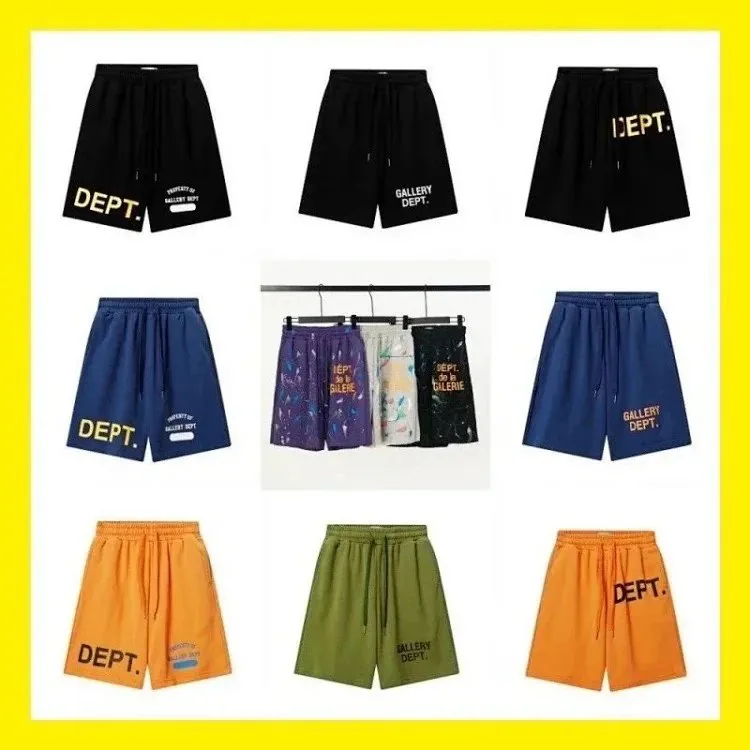
| DEPT. Sweat Shorts, 9 colours | Shorts | $19.18 |
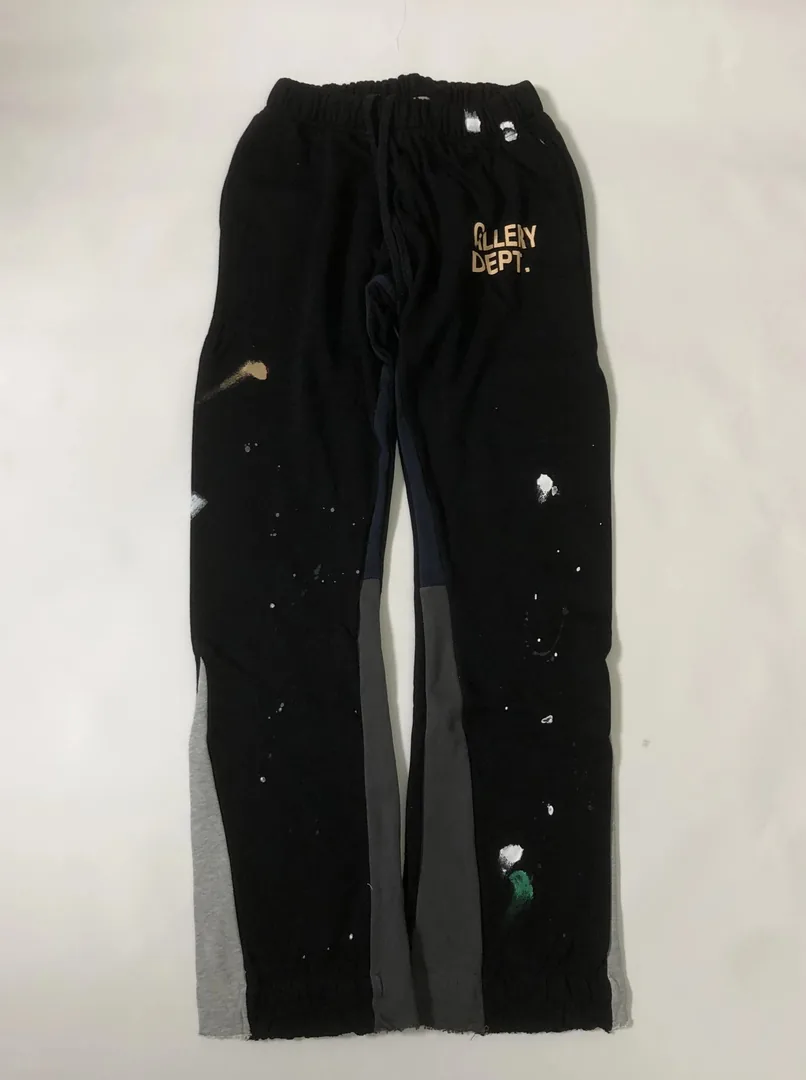
| Panelled Flare Sweatpants, Black | Flare | $20.45 |
| Washed-Black Graphic Tees | Tee | $20.61 |
| Hollywood Back-Print Hoodie, 6 colours | Hoodie | $21.09 |
| Multi-Graphic Tee Listing | Tee | $23.81 |
| Hollywood Back-Print Long-Sleeve | Long sleeve | $24.26 |
| Chest-Logo Hoodie, 5 colours | Hoodie | $27.21 |
| Camo & Splatter Trousers | Trousers | $31.80 |
| Front-Logo Hoodie, Heather Grey | Hoodie | $32.22 |
| Palette-Logo Collegiate Hoodie | Hoodie | $33.22 |
| Washed Blue Carpenter Flare Jeans | Denim | $36.59 |
| Painted Panelled Flare Sweatpants | Flare | $36.75 |
| Sleeveless DEPT. Hoodie, 2 colours | Vest | $38.89 |
| Cloud-Wash Full-Zip Hoodie, 3 colours | Zip | $55.00 |
Prices are our live catalogue prices at time of writing. Retail comparisons throughout come from gallerydept.com's own product feed, read in US dollars on 31 July 2026 — all 293 pieces the brand currently lists.
Why the usual QC method breaks on this brand
Start with what the brand says about itself, because it is unusually explicit and it does most of the work here.
Thirty of the 293 garments Gallery Dept currently sells carry the line "Hand-painted by artisans at our Los Angeles maison" in their official description. A large share of the tops and sweatshirts carry a second line: the pieces feature a "patent wash process that uses unique fading techniques for each piece, inclusive of logos and graphics". Read that clause slowly, because the last four words are the important ones. The brand is not saying the fabric fades unevenly and the print stays put. It is saying the graphic itself comes out differently on every unit.
The founder makes the same point in the first person. Describing the ASICS collaboration, Josué Thomas explains that he noticed his own shoes becoming "adorned with paint splatter, creating a unique and individualized piece of art, something that I wanted to replicate with this new project" — and the official copy for that shoe then states plainly that the pairs are produced so that each one is not exactly alike. Another trouser is described as "individually hand-painted"; a set of shorts as "hand-selected for their wash and distressing".
Put those together and you get a conclusion that no reps spreadsheet will tell you, because spreadsheets are built on the assumption that there is a correct answer to match:
This is the inverse of nearly every other page here. On our caps guide the whole judgment is embroidery density against a known reference. On sunglasses it is frame geometry against a known model. On Stüssy it is one specific letterform, traced from one man's handwriting, that either has varying stroke weight or does not. Those are all fixed targets. Gallery Dept deliberately does not provide one.
It is also a different problem from the one we set out in our Amiri guide, and the two are worth holding apart, because both brands sell manufactured age. Amiri's distressing is an industrial process — enzyme washes, sanding, applied repairs — applied consistently enough that a bad copy fails by looking too new. Gallery Dept's is hand work, and a bad copy fails by looking too repeatable. Same family, opposite tell, and a completely different check.
The four checks that replace it
If you cannot compare against a reference, you have to interrogate the paint itself. All four of these are visible in ordinary QC photographs; none of them needs the item in hand.
1. Is the paint physically there?
Thrown or brushed acrylic sits on top of the cloth and leaves relief. In a photograph taken with any side light, that relief shows as a faint shadow along one edge of each mark and a slight sheen difference where the paint has dried. A screen-printed imitation of splatter is perfectly level with the fabric and has no shadow at all — it photographs like a decal. Ask for one close-up shot taken at an angle rather than straight on, which is the single most useful thing you can request on this brand and takes the seller ten seconds.
The second half of the same check is the reverse side. Real paint applied wet to a single layer of jersey or fleece pushes slightly into the weave, so you often see a faint ghost of the mark from the inside of the garment. Print does not go through. If you are buying one of the $36.75 painted flares or the $20.45 black pair, one inside-out photo answers more than five outside ones.
2. Does the paint respect the pattern?
This one is almost foolproof and nobody uses it. When a garment is painted after assembly — which is what "hand-painted by artisans" means — the paint has no idea where the seams are. Splatter crosses side seams, runs over the hem rib, lands on the drawstring, skips onto a pocket bag, and continues around the body without any regard for panel boundaries. A screen print is applied to a flat panel, usually before or independent of assembly, and it therefore stops at the edges of a rectangle. Look at where the marks are relative to the construction: if every speck lives inside a clean invisible box on the front thigh and none of it crosses onto the side panel, it was printed.
Our purple panelled flares and the $36.59 carpenter jeans are the two picks where this is easiest to read, because both are heavily panelled — contrasting inserts down the outseam, a second denim tone at the knee — and you can trace whether the marks acknowledge those boundaries or ignore them.
3. Do two units differ from each other?
The strongest test costs nothing: ask the seller for QC photographs of two units, or look at a listing that shows several colourways of the same painted style. On a genuinely hand-finished garment the splatter pattern is different every time. On a printed one, every unit carries the identical constellation of marks in the identical positions — and once you have noticed that, you cannot unnotice it.
This is the check that inverts the site's usual advice. Everywhere else, consistency between units is a quality signal. Here it is the failure condition.
4. Did the wash reach the graphic?
The brand's own line — fading applied to "each piece, inclusive of logos and graphics" — gives you a fourth tell that most copies get backwards. The cheap way to make a "vintage" garment is to wash the blank, then print a crisp new graphic on top of the faded cloth. The result is a shirt that looks aged everywhere except the one area that should have aged with it. On the real thing the print went on first and took the wash too, so the letters are broken up, slightly chalky, thinner in the places the garment rubs, and never a solid uniform block of ink.
Our $18.98 washed patch tee and the $20.61 washed-black tee listing are the two picks to apply this to. A gold print that is uniformly bright on a shirt that is visibly grey-black at the shoulders is telling you the sequence was wrong.
The painted and panelled pieces, judged honestly
These are the reason anyone searches for this brand, so they deserve a straight assessment rather than a sales pitch.
The painted panelled flare sweatpants at $36.75 are the closest thing here to the signature product. Purple-navy body, contrasting pale blue, black and cream inserts down the outseam and through the knee, a small chest-height wordmark, and white and green paint scattered across both legs. The brand's own GD PAINTED FLARE SWEATPANT retails at $965, and the DÉPT LOGO PAINTED SWEATPANT FLARE at $850. At $36.75 that is a twenty-six-fold gap, and the silhouette — the stacked, split-hem flare — is the part that reps reproduce well, because it is pattern cutting rather than hand finishing.
The washed blue carpenter flares at $36.59 are the more interesting garment. Light-wash denim with contrast dark-denim knee panels applied as a visible patch, a hammer loop, a leather jacron patch at the back waist, multicoloured paint specks scattered front and back, and a raw split hem. The brand's LA FLARE CARPENTER REWORKED sits at $1,195 and the LA OG FLARE at $995; the top of the flare range, the G TIME LA FLARE, is $2,500. The rep is roughly a thirtieth of the first of those.
The $20.45 black panelled flares — labelled "shorts" in our catalogue, which they are not — are the cheapest way into the silhouette, with grey and navy inserts and a gold wordmark at the hip. The $31.80 camo and splatter trousers cover the fatigue side of the line: desert and woodland camo carpenter cuts alongside splattered sweat and denim flares in one listing. And the $19.18 sweat shorts — filed under "hoodie", again wrongly — are the summer version of the logo half, in nine colourways.
Two of the picks sit outside both groups. The $38.89 sleeveless hoodie is a cut-off hooded vest with an arched DEPT. print in two colourways, filed in our catalogue as a "tracksuit", which it plainly is not — the cut-off hoodie is a real and recurring shape in the brand's own range. The $23.81 multi-graphic tee listing collects a dozen designs in one place, including the drive-thru illustration and the Long Beach and Hollywood city prints, and is the cheapest way to sample which graphic you actually like before committing.
Here is the part that a page trying to sell you these would leave out. On the painted pieces, what you are buying is a very good picture of a process. The paint on your rep will be someone's efficient approximation of thrown paint, applied the same way to a run of garments. That is a different object from one that a person marked once, in a room on Beverly Boulevard, and will never mark the same way again. You can decide that the distinction does not matter to you — plenty of people reasonably do, because the garment reads correctly across a room and costs a thirtieth as much. But you should decide it knowingly rather than discover it, which is the whole reason this section exists.
Sizing: oversized by design, and flares fail differently
The house cut is oversized and boxy — wide through the chest, dropped shoulder, generous body — and these reps are made to Asian measurements, which run smaller than the US labelling the brand itself uses. Both effects push in the same direction, so a US medium in genuine Gallery Dept commonly needs a large or extra large here, and guessing by letter fails more often on this brand than on a slim-cut one.
The tops method is the one we use everywhere: take a hoodie or tee whose fit you already like, lay it flat, measure armpit to armpit and double it for the chest, then measure from the collar seam straight down to the hem. Almost every listing here carries a centimetre chart with chest, length, shoulder and sleeve. Match your two numbers, ignore the letter, and take the larger size if you are between two — an oversized piece a size too small just reads as an ordinary tight sweatshirt, which defeats the point of the cut. Our size guide covers the same measure-first method with a full chart.
The trousers need a different warning, and it is specific to this silhouette. A flare is defined by geometry: where the knee panel sits, where the leg starts opening, where the hem breaks over the shoe. Get the inseam wrong and you do not get a slightly-off pair of trousers — you get the wrong shape, because the flare now starts at your calf instead of your knee. And unlike a straight leg, you cannot fix this by hemming: shortening a flare from the bottom cuts off the widest part of the cone and closes the leg opening, and on the panelled pairs it also cuts through the contrast inserts. So measure the inseam of a pair you actually wear, match it to the chart, and accept a slightly long break rather than a short one. This is the mirror image of the point we made in our belts guide, where the strap is the one component you can trim to fit yourself; here the length is the one thing you cannot correct after the fact.
Ready to order?
- Decide which half of the brand you want. Logo pieces are among the best-value items on this site. Painted pieces are a good likeness of a process, and you should want them on those terms.
- Start with the $21.09 Hollywood back-print hoodie or the $17.42 long sleeve — the cheapest way to test print quality and fleece weight.
- Measure a garment you own in centimetres, match the listing chart, size up if you are between two, and be strict about inseam on anything flared.
- Click through to Kakobuy, or switch to any of the 15 agents we support from the product page.
- When the QC photo arrives, ask for two things on any painted item: one shot at an angle rather than straight on, and one of the inside of the garment behind the paint. Relief and bleed-through mean paint; flat and clean means print.
New to agents? Start with how to use Kakobuy, and QC photos explained covers what you can and cannot ask a QC agent for. For more in this vein, Amiri covers the other brand on this site built on manufactured age, reps hoodies ranks the wider sweatshirt field, reps t-shirts covers graphic cotton across brands, and best Kakobuy finds collects the strongest picks in every category. Because fleece and denim are heavy and tees are not, the shipping guide shows how weight brackets change what a combined parcel really costs.
Frequently asked questions
How much do Gallery Dept reps cost on Kakobuy?
From $17.42 for a long-sleeve logo tee to $55.00 for a cloud-wash full-zip hoodie, with most of the catalogue between $17 and $37. The two pieces worth knowing about are the painted panelled flare sweatpants at $36.75 and the washed blue carpenter flare jeans at $36.59, because those are the styles the brand is actually known for. For scale: Gallery Dept sells its pullover hoodies at $650 to $700 and its own painted flare sweatpant at $965, so the hoodie comparison here is roughly thirty-seven to one — the widest ratio on this site, though our jackets guide still holds the biggest saving in absolute dollars.
How do you spot a bad Gallery Dept rep?
Not the usual way, and this is the one brand page on this site where the standard method actively misleads you. Everywhere else you compare the QC photo against the official product shot and look for differences. Gallery Dept states in its own product copy that its wash uses "unique fading techniques for each piece, inclusive of logos and graphics", and that its painted pieces are "hand-painted by artisans at our Los Angeles maison" — so the original has no fixed appearance to compare against. What you check instead is whether the paint is paint. Real thrown paint has physical relief you can see in raking light, bleeds slightly into the weave, ignores panel seams and pocket edges because nobody was aiming, and cracks along fold lines after a few washes. A printed imitation of paint is dead flat, stops obediently inside a rectangle, has crisp vector edges, and — the giveaway — looks identical on every unit the seller photographs.
Are Gallery Dept reps worth it?
On the logo pieces, yes, and by a wider margin than almost anything else we sell: a plain back-print hoodie is $650 at the brand and $17.58 to $21.09 here, and there is nothing hand-made in that garment to lose. On the painted and panelled pieces it depends on what you want from them. You can buy an extremely convincing object at $36.75 that reads correctly at conversational distance. What you cannot buy at that price is the thing the brand actually sells, which is that no two pieces are the same. If that distinction matters to you, the honest route into this brand is not a rep at all — it is the collaboration footwear, where a Gallery Dept x Vans Rowley XLT retails at $150.
What size Gallery Dept rep should I order?
Size up on the tops, and measure the flares before you commit. The house cut is oversized and boxy through the body with dropped shoulders, and these reps are made to Asian sizing, which runs smaller than the US labels the brand itself uses — both effects push the same direction, so a US medium commonly needs a large or extra large here. The trousers are the harder problem: a flare is defined by where the knee panel sits, so getting the length wrong ruins the silhouette in a way that a hem alteration cannot fix. Measure the inseam of a pair you already wear, match the listing chart in centimetres rather than trusting the letter, and remember that a flare is supposed to break over the shoe.
Why does the tee say 7613 Beverly Blvd when the store is at 7956?
Because that graphic is genuine. "7613 BEVERLY BLVD, Los Angeles Ca. 90036" is one of Gallery Dept's own long-running print motifs, and real examples of the Beverly Blvd tee sell through Farfetch, The RealReal and Depop carrying exactly that line. The brand's current Los Angeles store is at 7956 Beverly Blvd, CA 90048, with a second store at 140 NE 39th St in Miami. So the address on the shirt is a period reference rather than a mistake, and it is not a tell — which is worth saying, because guessing that a specific number is "wrong" is exactly the sort of thing that gets repeated as fact in reps communities and is not true here.
Is Gallery Dept a real brand or a resale phenomenon?
It is a real, small, physically located business. The artist and designer Josué Thomas founded it in Los Angeles in 2017, growing it out of a downtown studio space that was a working concept rather than a label — somewhere he kept his tools and materials and people came to collaborate. The ethos that survived was reimagining forgotten clothing, which is why so much of the line is built on vintage bases: one bag is described in official copy as "crafted from vintage army tents", and a signature trouser as "mixed vintage denim construction". Of the 293 pieces in the brand's current catalogue, 176 carry a "Made in USA" line. It also runs partnerships with Vans, UGG, ASICS, New Era, Lanvin, the LA Dodgers and the LA Rams, and the founder's record label, Art That Kills, appears as its own line on the site.