
Chinese Shoe Size Conversion: CN, EU, US and UK
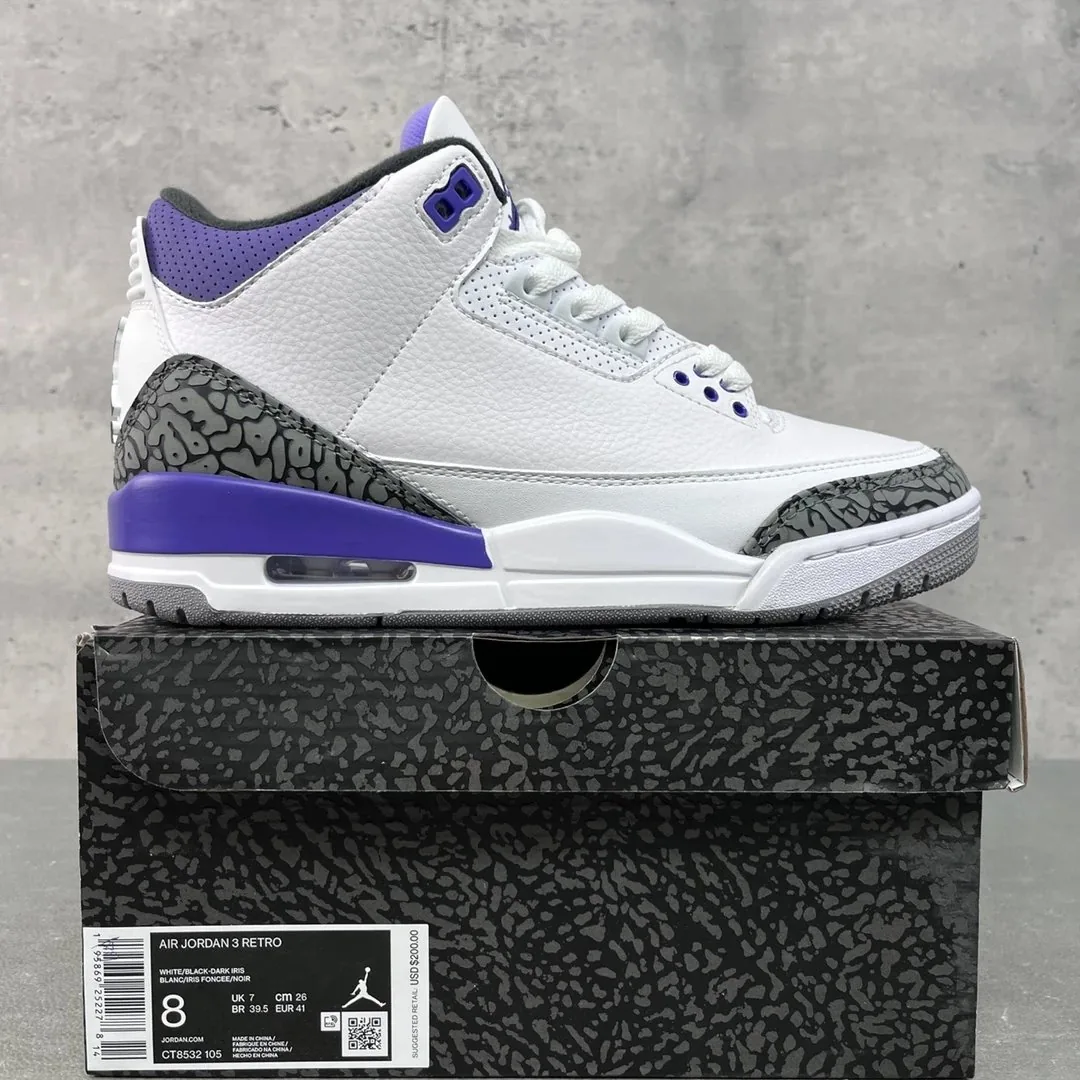
Converting a shoe size is arithmetic, and arithmetic is the easy half. The hard half is knowing which scale the number in front of you belongs to — and on a replica listing, nobody tells you. We checked: across the 3,302 shoe listings on this site, exactly 21 state a size range at all, two mention US sizes, one mentions EU, and none mentions centimetres. The product page template does not even have a size field. So this guide does two things. It gives you the real conversion tables, pulled on 9 August 2026 from the official Nike, adidas and New Balance charts and printed exactly as those brands print them — including the places where they contradict each other. And it shows you where the sizing information is actually hiding in a listing like this, which turns out to be inside the photographs, on the end of a shoe box.

Convert your size
Measure your longer foot — heel to the tip of the longest toe, standing, at the end of the day — and put that number in centimetres below. The tool reads each brand's own published chart rather than a universal formula, which is why the three answers are not always the same number.
Between sizes? adidas says go one full size up for a loose fit, one down for a tight fit. New Balance says: "Choose the larger size if your feet are between sizes." This tool follows that rule and never rounds down.
The official charts, side by side
These are the numbers as the three brands publish them. We pulled them on 9 August 2026 directly from nike.com's size and fit pages, from the size-guide panel on adidas.com's US product pages, and from newbalance.com's size guide. Nothing here is interpolated, rounded or averaged, which matters because the interesting part is precisely where they disagree.
Nike and Jordan
Nike publishes two centimetre columns and warns that they are different things: the CM/JP figure is what appears on the shoe box and label, while Foot Length is your actual foot. In Nike's own words: "Please note the CM size displayed on shoe boxes and labels is different than Foot Length (cm)." That single sentence explains most of the confusion in this market — the number on the box is not the length of your foot, and people convert it as though it were.
| US Men | US Women | UK | EU | CM/JP (box) | Foot length (cm) |
|---|---|---|---|---|---|
| 6 | 7.5 | 5.5 | 38.5 | 24 | 23.7 |
| 6.5 | 8 | 6 | 39 | 24.5 | 24.1 |
| 7 | 8.5 | 6 | 40 | 25 | 24.5 |
| 7.5 | 9 | 6.5 | 40.5 | 25.5 | 25 |
| 8 | 9.5 | 7 | 41 | 26 | 25.4 |
| 8.5 | 10 | 7.5 | 42 | 26.5 | 25.8 |
| 9 | 10.5 | 8 | 42.5 | 27 | 26.2 |
| 9.5 | 11 | 8.5 | 43 | 27.5 | 26.7 |
| 10 | 11.5 | 9 | 44 | 28 | 27.1 |
| 10.5 | 12 | 9.5 | 44.5 | 28.5 | 27.5 |
| 11 | 12.5 | 10 | 45 | 29 | 27.9 |
| 11.5 | 13 | 10.5 | 45.5 | 29.5 | 28.3 |
| 12 | 13.5 | 11 | 46 | 30 | 28.8 |
| 13 | 14.5 | 12 | 47.5 | 31 | 29.6 |
adidas
adidas publishes one combined chart for men and women rather than two, and it numbers its European sizes in thirds: 42, then 42 2/3, then 43 1/3, then 44. There is no such thing as an adidas EU 42.5. If you see one advertised, somebody has rounded a number that adidas does not round.
| US Men | US Women | UK | EU | JP | Heel-toe (cm) |
|---|---|---|---|---|---|
| 6 | 7 | 5.5 | 38 2/3 | 240 | 23.8 |
| 6.5 | 7.5 | 6 | 39 1/3 | 245 | 24.2 |
| 7 | 8 | 6.5 | 40 | 250 | 24.6 |
| 7.5 | 8.5 | 7 | 40 2/3 | 255 | 25.0 |
| 8 | 9 | 7.5 | 41 1/3 | 260 | 25.5 |
| 8.5 | 9.5 | 8 | 42 | 265 | 25.9 |
| 9 | 10 | 8.5 | 42 2/3 | 270 | 26.3 |
| 9.5 | 10.5 | 9 | 43 1/3 | 275 | 26.7 |
| 10 | 11 | 9.5 | 44 | 280 | 27.1 |
| 10.5 | 11.5 | 10 | 44 2/3 | 285 | 27.6 |
| 11 | 12 | 10.5 | 45 1/3 | 290 | 28.0 |
| 11.5 | 12.5 | 11 | 46 | 295 | 28.4 |
| 12 | 13 | 11.5 | 46 2/3 | 300 | 28.8 |
| 13 | 14 | 12.5 | 48 | 310 | 29.7 |
New Balance
New Balance is the only one of the three that publishes widths as well as lengths, and its width letters mean opposite things depending on the column you are in: D is standard for men but wide for women, and B is narrow for men but standard for women. If you have ever seen a "New Balance 2E" listed with no explanation, that is an extra-wide men's or a wide women's shoe.
| US Men | US Women | UK | EU | Length (cm) |
|---|---|---|---|---|
| 6 | 7.5 | 5.5 | 38.5 | 24 |
| 6.5 | 8 | 6 | 39.5 | 24.5 |
| 7 | 8.5 | 6.5 | 40 | 25 |
| 7.5 | 9 | 7 | 40.5 | 25.5 |
| 8 | 9.5 | 7.5 | 41.5 | 26 |
| 8.5 | 10 | 8 | 42 | 26.5 |
| 9 | 10.5 | 8.5 | 42.5 | 27 |
| 9.5 | 11 | 9 | 43 | 27.5 |
| 10 | 11.5 | 9.5 | 44 | 28 |
| 10.5 | 12 | 10 | 44.5 | 28.5 |
| 11 | 12.5 | 10.5 | 45 | 29 |
| 11.5 | 13 | 11 | 45.5 | 29.5 |
| 12 | 13.5 | 11.5 | 46.5 | 30 |
| 13 | 14.5 | 12.5 | 47.5 | 31 |
What our own listings actually tell you
We ran the numbers across all seven product files on this site — 28,028 items — and isolated everything that is footwear: 2,220 sneakers, 138 slides and the remainder caught by title, for 3,302 shoe listings. Then we looked for sizing information.
| What we looked for | Listings | Share |
|---|---|---|
| Mentions "size" anywhere in the title or original name | 27 | 0.8% |
| States a readable size range (e.g. "Size: 36-45") | 21 | 0.6% |
| Mentions US sizing | 2 | 0.06% |
| Mentions EU sizing | 1 | 0.03% |
| Mentions centimetres or millimetres | 0 | 0% |
And the twenty-one that do give a range do not agree with each other either. Eight say 36–45. Five say 36–47.5. The rest say 34–50, 36–50, 36–48, 36–46, 36–44, 39–44, 40–45, and one kids' listing says 22–37. So "EU 36–45" is not a standard. It is the most common factory run, and there are at least nine others in use on this site alone.
There is a more basic point underneath the statistics. The product page template on this site has no size field. Not an empty one — there is no field. So no shoe listing here shows a size on the page, in any language, at any price. Every piece of sizing information that exists is inside a photograph, and that is where we went looking next.
Do not trust a size chart pasted into a listing photo
The Valentino low-top listing ends its gallery with a proper-looking conversion table, headed 尺码对照表 — "size comparison chart". It is the sort of image that looks authoritative, and it is the reason we now check them.
The image contains two tables, stacked, and they contradict each other:
| Source | EU 41 | EU 42 |
|---|---|---|
| Upper table in that image | UK 8 · US 11 · 26.5 cm | UK 9 · US 12 |
| Lower table in the same image | UK 7 · US 8 · 27.0 cm | UK 8 · US 9 · 27.7 cm |
| Nike's official chart | UK 7 · US 8 · box 26 cm | UK 7.5 · US 8.5 · box 26.5 cm |
Neither table is labelled men's or women's — that is presumably what the two of them are meant to be. The upper table puts EU 42 at US 12; the lower one puts it at US 9; Nike puts it at US 8.5. That is a three-size spread for one European number inside a single image on a single listing, and the image also disagrees with itself about how long an EU 41 foot is: 26.5 cm in one table, 27.0 in the other.
The lower table is the more dangerous of the two, because it looks right. It tracks Nike exactly at EU 41 — UK 7, US 8 — and then drifts, because it contains no half sizes at all: it runs US 6, 7, 8, 9, 10, 11, 12 against EU 39 to 45, so from EU 42 upwards it cannot express the half size that Nike actually uses. A chart that agrees with reality at the row you happen to check, and is half a size out at the row you buy, is worse than an obviously wrong one.
These charts get copied from seller to seller like clip art. Nobody who pastes one has checked it, because checking it is not their job and nothing in the system punishes an error. Use them as evidence that a size run exists. Do not use them to pick a number.
How to actually order the right size
Five steps, in order, and none of them involves a conversion website.
1. Measure your foot properly. Stand on a sheet of paper against a wall with your heel touching it, mark the end of the longest toe, and measure the distance in centimetres. Do it at the end of the day, when your feet are at their largest — this is adidas's own instruction, not ours. Measure both feet and use the larger; New Balance points out that left and right can differ by as much as a full size, and tells you to buy for the bigger one.
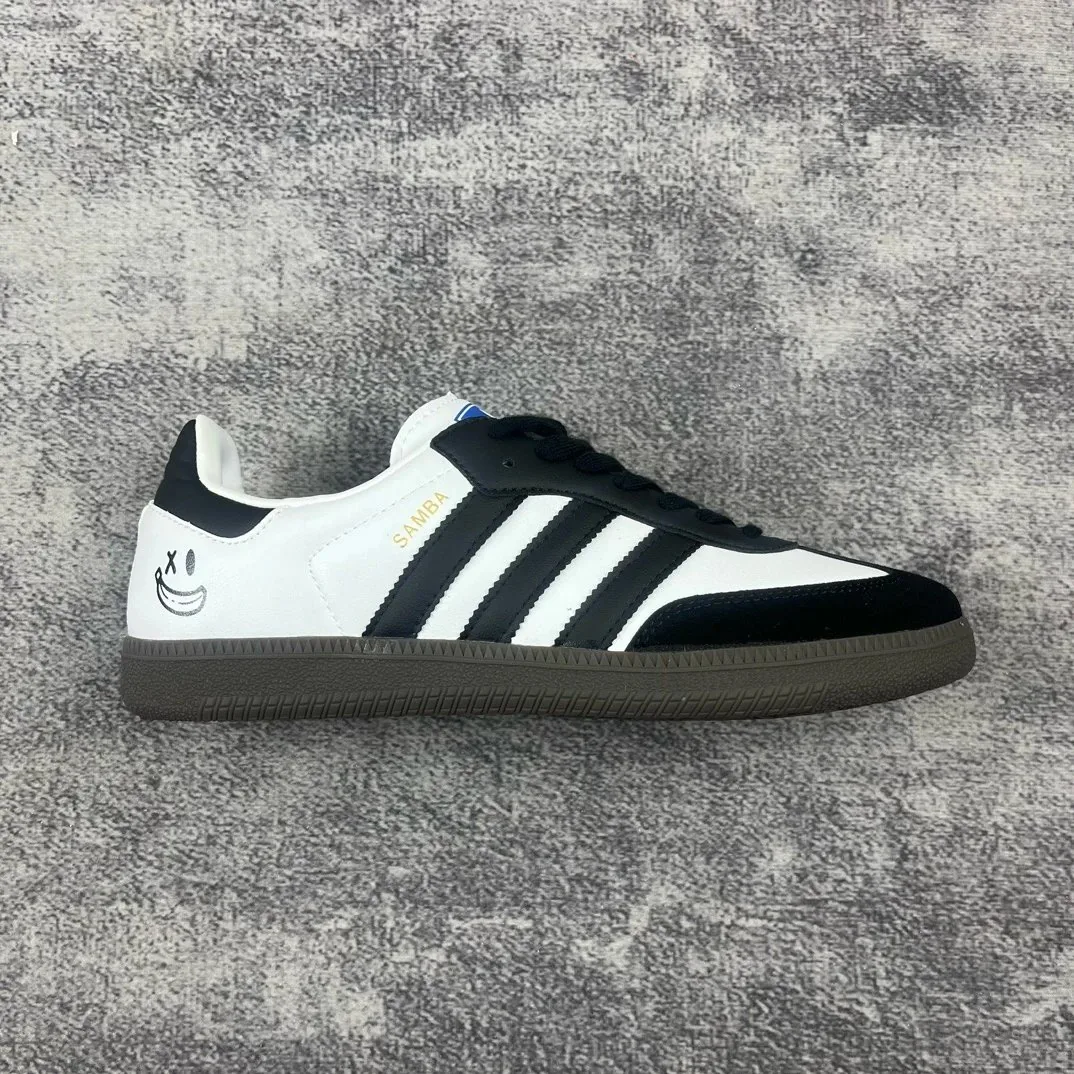
2. Identify the brand the shoe is copying. Not the seller, the original. A replica Samba is an adidas last with an adidas size run; a replica Air Force 1 is a Nike last. This is the step everybody skips, and it is the one that decides which chart applies.
3. Read your centimetre figure off that brand's chart above. If you land between two rows, take the larger — all three publish that advice in some form. Nike's measuring instructions end with it: "If the measurement is between sizes, we recommend sizing up." New Balance says to "choose the larger size if your feet are between sizes". adidas says one full size up for a loose fit, one down for a tight one.
4. Convert to the European number, and order in European numbers. That is the scale the factory works in, it is what the size run is printed in, and it is what will be written on the box. Ordering in US sizes introduces a translation step at the seller's end, performed by someone who may be reading one of those broken charts.
5. Check the box label before it ships. The QC photo request above. This is the only point in the process where you can catch a mistake for free.
One thing to be honest about: none of this makes returns possible. This market has no exchange desk, and shipping a pair back to a warehouse in China costs more than most of the shoes on this site are worth. That asymmetry is exactly why the five minutes of measuring and the one extra photograph are worth it — the cost of getting it wrong is the whole purchase, and the cost of getting it right is a piece of paper and a ruler.
Where sizing risk is highest
Not every shoe carries the same risk, and it is worth knowing which ones punish a half-size error.
Slides and sandals are the worst. There is nothing to adjust — no laces, no strap, no insole to swap — so the size is the entire fit decision. Our slides guide is organised around exactly this: foam styles run large, sport slides run close to true, moulded cork styles come in whole sizes only and are also cut in narrow and regular widths. On this site slides are a small shelf, 138 listings against 2,220 sneakers, but they generate a disproportionate share of the fit complaints in this market for that structural reason.
Laced sneakers are the most forgiving. Laces are an adjustment mechanism, a thicker or thinner sock is another, and an aftermarket insole is a third. A half size out in a lace-up trainer is usually wearable. A half size out in a slide is a bin.
Boots and anything with a rigid shell are back at the hard end — the same principle as ski boots, which is precisely why the Mondopoint millimetre system exists in that world.
There is a parallel here with clothing that is worth drawing, because the shelf behaves the same way. In our denim guide we found that jeans are the one category where the size is a physical measurement you can verify before shipping — you can ask for a tape measure across the waistband. Footwear is nearly the opposite: the number is a code, not a measurement, and the only physical thing you can ask to see is the box label. Same request, different photograph.
The short version
A Chinese shoe size is a foot length in millimetres. A replica shoe size is a European number. They are not the same system and the listing will not tell you which one it is using, because on this site the listing does not mention size at all in 99.4 per cent of cases.
So: measure your foot in centimetres, decide which brand the shoe is copying, read that brand's own chart, round up when you are between sizes, order in European numbers, and ask for a photograph of the box label before it ships. The label is the one document in this transaction that was written by the same people who made the shoe.
Related reading: the shelf itself in sneakers and best reps sneakers, why fit is the whole game in best reps slides, how to request extra photographs in QC photos explained, apparel sizing in the jersey size guide, and the wider catalogue in best Kakobuy finds.
Frequently asked questions
What size is a Chinese shoe size in US sizing?
It depends on which of two things the seller means by "Chinese size". China uses the Mondopoint system, which ISO defines as sizing by foot length measured in millimetres: a 250 is a 250 mm foot, and that number sits close to the Japanese scale rather than the US one. But almost every replica sneaker listing you will meet does not use it — it uses the European numbers, 36 to 45, because that is what the factory size run and the box are printed in. So the honest answer is: measure your foot in centimetres, then read that figure off the chart of the brand the shoe is copying. Do not convert a Chinese number straight into a US number, because you cannot tell from the listing which of the two systems the number came from, and because ISO itself says there is no exact conversion between these systems.
Is EU 42 always US 8.5?
No. On 9 August 2026 we pulled the official size charts of Nike, adidas and New Balance and compared them row by row. All three do put EU 42 at men's US 8.5, so that one lines up — but the UK column does not: Nike prints UK 7.5 against EU 42, while adidas and New Balance both print UK 8. And the centimetre column disagrees more than that: New Balance puts a 26.5 cm foot at US 8.5, whereas Nike's chart puts 26.5 cm between US 9 and US 9.5. The same foot is an 8.5 at one brand and a 9 or 9.5 at the other. A conversion is only true inside one brand's chart.
Do the listings on this site say what sizes they come in?
Almost never, and we checked all of them. Across the 3,302 shoe listings on this site — 2,220 sneakers, 138 slides and the rest by title — exactly 27 mention the word "size" anywhere in their title or their original Chinese name, and only 21 give a size range you can actually read. That is 0.6 per cent. Two listings mention US sizing. One mentions EU. None mentions centimetres. The product page template on this site does not have a size field at all, so no shoe here displays a size anywhere on the page. Whatever sizing information exists is inside the photographs.
How do I find out what sizes a listing actually stocks?
Ask before you pay, and ask in the format you want the answer in. The single most useful thing you can request is a photograph of the box label. On one listing here — an Air Jordan 3 — the final gallery image happens to show the box end label, and it reads 8.5, UK 7.5, BR 40, EUR 42, CM 26.5 on one sticker. That is five scales at once, printed by the factory, and when we checked it against Nike's own chart it matched exactly: Nike prints US 8.5 = UK 7.5 = CM/JP 26.5 = EU 42. So the label on the box is a working conversion table, and it is the only one in this transaction that came from the same place as the shoe.
Are half sizes available?
Sometimes, and not in a pattern you can predict. One adidas Campus listing here prints its size run across the top of the photograph: 36 36 37 38 38.5 39 40 40.5 41 42 42.5 43 44 45. Read that carefully. There is a 38.5, a 40.5 and a 42.5, but no 37.5, no 39.5, no 41.5 and no 43.5, and 36 appears twice. The factory run is a list of the moulds that exist, not a continuous scale. So if your size lands on a half that is not in the run, you are choosing between two whole sizes, and both adidas and New Balance officially say to take the larger one.
Should I size up when buying reps?
Not as a blanket rule, and be careful who is telling you to. Neither adidas nor New Balance publishes any "runs large" or "runs small" statement — we looked. What they publish is a rule for people between sizes: adidas says go one full size up for a loose fit and one down for a tight one, New Balance says choose the larger size if you are between. Anything beyond that, including the widespread advice to size up half a size on particular replica models, is community experience rather than a published fact, and it varies by factory batch. The reliable move is to know your foot length in centimetres and to check it against the correct brand chart.
Why do two size charts in the same listing disagree?
Because generic conversion images get copied between sellers with no quality control, and nobody ever checks them. One listing here — a Valentino low-top — ends its gallery with a Chinese conversion table, and the image contains two tables stacked on top of each other. The upper one says EU 42 equals UK 9 and US 12. The lower one says EU 42 equals UK 8 and US 9. Neither is labelled men's or women's, and neither matches Nike, where EU 42 is US 8.5. That is a three-size spread for the same European number inside a single image on a single listing. Treat charts printed into listing photographs as decoration.
What about Crocs, UGG and slides?
They are different products with different failure modes. Crocs publish whole sizes only — their own chart says so and tells half-size wearers to go up or down — and their women's sizes run two above their men's, which is a third different offset after Nike and New Balance at 1.5 and adidas at 1. UGG is the only brand we checked that prints a "China (MM)" column in its official chart, so a US women's 7 is an EU 38 and a Chinese 240; UGG also says its footwear should be snug at first and that the sheepskin stretches, which only helps if the copy is actually sheepskin. Slides are the ones people get wrong most often, because there is nothing to adjust — our slides guide is organised around fit tiers for exactly that reason.